
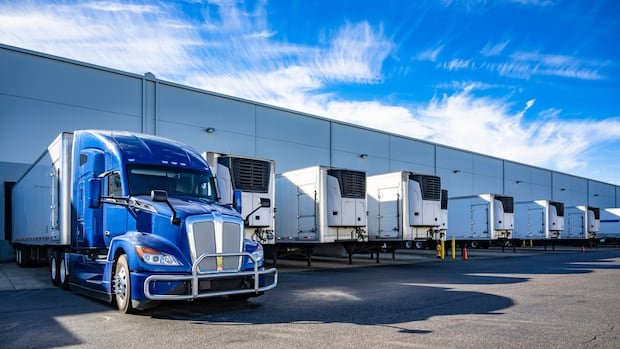


Canadians are preparing for significant increases in prices on various imported goods due to impending counter-tariffs. This includes not only consumer products like aluminum, toilet paper, and furniture but also the semi-trailers used to transport these items within the country.
Ocean Trailer, the primary retailer of semi-trailers in Western Canada, is awaiting a shipment of 600 trailers from U.S. manufacturers valued at $45 million. With a 25% Canadian counter-tariff on trailers set to take effect soon, the company is expediting the delivery of as many trailers as possible before the deadline.
According to Mack Keay, the Chief Operating Officer of Ocean Trailer, the additional 25% cost imposed by the counter-tariffs exceeds their profit margin on trailers. Consequently, they will be compelled to pass on this cost to customers. The federal government’s countermeasures, responding to recent tariffs from the U.S. administration, will impact $27.6 billion worth of American goods.
Keay mentioned the possibility of canceling some trailer orders, but those already in production in the U.S. cannot be altered. Any trailers not delivered to Canada by the deadline will either remain in the U.S. or be sold to American retailers, resulting in financial losses for Ocean Trailer.
The Manitoba Trucking Association expressed concerns over the rising costs of semi-trailers, as the majority of trailers in Canada are sourced from the U.S. Many businesses are hastening their shipments to avoid the impending counter-tariffs.
The two most common types of semi-trailers used in Canada are dry vans and refrigerated vans. Dry vans transport various non-perishable items, while refrigerated vans cater to goods requiring temperature-controlled conditions like groceries and pharmaceuticals.
There are only two semi-trailer manufacturers in Canada, with limited capacity to meet the surge in demand following the counter-tariffs. Keay emphasized the inadequacy of Canada’s domestic manufacturing capabilities to meet the industry’s needs.
The potential cost increase from the counter-tariffs is substantial, with an average trailer cost of $75,000 likely to rise to $95,000 with the additional 25% tariff. The impact is expected to cascade down to consumer goods as shipping costs rise.
Dallas Senebald, the branch manager of Ocean Trailer’s Winnipeg office, expressed concerns over the impending shortage of trailers, escalating costs, and the consequent impact on the industry and consumers. The reliance on a mixed model for trailer supplies may pose challenges in meeting the increased demand.
The industry anticipates a surge in demand for trailer rentals as an alternative to purchasing U.S. trailers subject to counter-tariffs. However, insufficient rental availability could strain customer relations and potentially affect business sustainability.
Both industry experts and associations are apprehensive about the prolonged duration of the tariff war and its potential to drive companies, especially in the trucking sector, into bankruptcy if the situation persists for an extended period.