
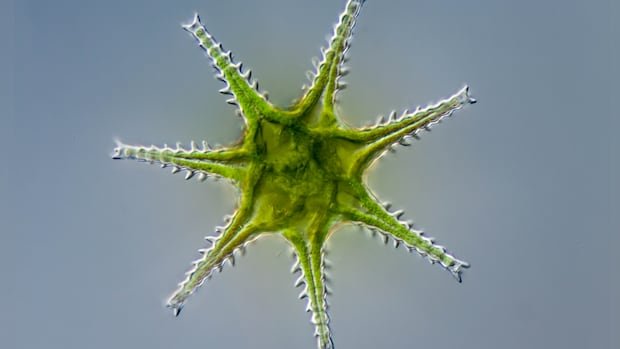


A regenerated forest can appear tall, dense, and verdant. However, upon closer inspection, scientists are discovering that some of the tiniest inhabitants, such as specific mosses, lichens, algae, and fungi, are often still absent in restored habitats like forests and wetlands.
While habitat restoration can aid in the recovery of declining animal and plant species, recent studies indicate that not all species return at the same pace. Some of the less conspicuous inhabitants may remain scarce or missing for decades, potentially impacting other species.
Ellen Macdonald, a botanist at the University of Alberta, has dedicated her career to studying the intricate ecosystems within forests, focusing on the small flowers, mosses, liverworts, and lichens that thrive in these environments.
Macdonald’s research, combined with global data, delves into the timeline for the reestablishment of plants and animals as boreal forests regenerate post-clearcutting. A recent study published in the journal Nature Sustainability revealed that birch and aspen forests recover within 25 years, while conifer forests take significantly longer. In conifer forests, understory plants like lichens, mosses, and liverworts may take 85 years or more to return, with some species still absent after a century.
This phenomenon is not limited to boreal forests. Researchers studying wetlands and other restored areas have noted that while habitats may appear healthy, certain less visible species remain missing.
Viktoria Wagner, an associate professor at the University of Alberta, describes this decline as a “silent loss,” where species may not go extinct entirely but vanish from their former locations, reducing overall species diversity at specific sites.
Missing species can impede recovery processes and have far-reaching consequences. Algae, for instance, play a crucial role in global photosynthesis, influencing oxygen availability and food sources on Earth.
Understanding these patterns can guide landscape management practices to preserve more species. Suggestions include selective harvesting in conifer forests instead of clearcutting to support biodiversity conservation efforts.
In addition to forests, habitats for algae worldwide are also under threat, emphasizing the importance of preserving these vital species. Efforts to collect and cultivate algae strains are crucial for maintaining biodiversity and ensuring the survival of these often overlooked organisms.
Ultimately, the ongoing loss of species underscores the need for proactive conservation measures that go beyond protecting isolated habitats. It highlights the importance of maintaining and restoring diverse habitats to sustain species across landscapes.
Preserving biodiversity is an ongoing process that requires active interventions to safeguard ecosystems and the myriad species they support.