
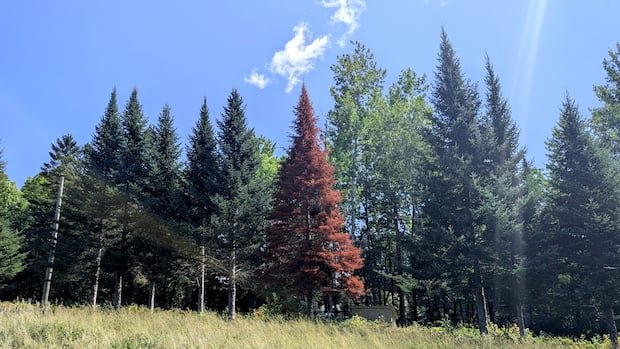


Balsam fir trees in New Brunswick are exhibiting red discoloration and dying following last summer’s exceptional drought, sparking concerns about the future of the region’s iconic tree. Anthony Taylor, a forestry researcher at the University of New Brunswick, has been fielding reports from woodlot owners and witnessing the devastation firsthand. The once vibrant evergreen trees, often chosen for Christmas displays, are gradually reddening, desiccating, and perishing.
Taylor, who has been investigating the impact of climate change on New Brunswick’s forests for an extended period, notes that the current phenomenon aligns with observations from previous scorching, arid summers. He underscores the detrimental effects of warm, dry conditions on balsam fir growth, emphasizing that such circumstances impede the trees’ ability to flourish.
The researcher explains that during drought periods, balsam firs prematurely halt the photosynthesis process, impeding their growth cycle. This interruption prevents the production of essential energy reserves needed for vital functions and defense mechanisms, rendering the trees more susceptible to stressors like insects or pathogens, ultimately increasing the likelihood of widespread mortality.
Moreover, balsam firs possess shallow root systems, complicating their access to water during extended dry spells. Peter McKeil, a woodlot owner in Burtt’s Corner, has already detected signs of distress in his trees since June, witnessing a progressive reddening of the lower branches. Despite salvaging some deceased trees for lumber, McKeil is adjusting his harvesting strategies to maximize the remaining fir before further losses occur.
Expressing grave concerns about the species’ future in the face of escalating climate change impacts, McKeil fears the eventual demise of balsam firs, particularly in southern New Brunswick. He anticipates a northward migration of the species as temperatures shift. Taylor echoes these worries, highlighting the urgent need for climate action to avert irreversible ecological harm.
The visible evidence of balsam fir decline serves as a stark reminder of the urgent need to address climate change. Taylor emphasizes the imperative of transitioning away from fossil fuels and implementing sustainable forest management practices to curb the escalating environmental crisis. He hopes his research findings will prompt societal action to mitigate climate change and safeguard the province’s natural heritage.