
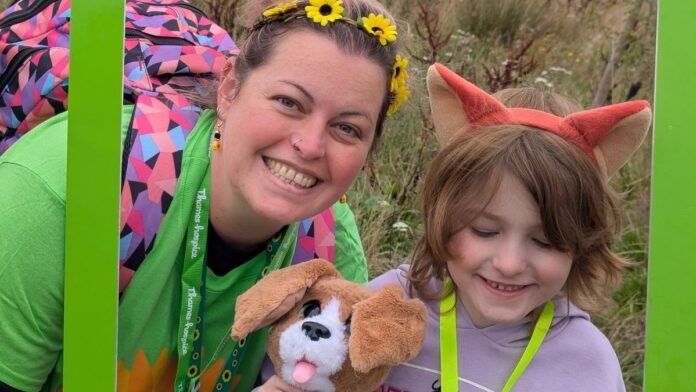


Kirsty Northam is shedding light on the challenges of raising a child with disabilities, especially in terms of financial strain. Supporting her six-year-old daughter, who requires specialized accommodations and therapies, adds an extra £4,800 annually to the family’s expenses. Alongside Purpl founder Georgina Coleman, the Berkshire mother advocates for improved assistance for families with special educational needs and disabilities (SEND).
Harper, Kirsty’s daughter, has been diagnosed with autism (Pathological Demand Avoidance profile), Hyperlexia, Sensory Processing Difficulties, and Restrictive Eating Patterns. For Kirsty and her partner Dean, this situation meant adjusting their parenting expectations.
Kirsty, who also copes with a functional neurological disorder, faces additional difficulties in caring for her daughter. She shared, “Some days, I quietly cry in the corner. Taking care of a disabled child often means putting their needs before your own, sacrificing a lot.”
Describing their journey, Kirsty expressed, “The reality of raising Harper has differed from our initial hopes and ideas. While we adore her, we have learned not to compare our family to others.”
The Northam family incurs an estimated £4,120 more annually than families with only one child. Despite receiving support from the Department for Work and Pensions (DWP) through benefits like DLA and Carer’s Allowance, the total payments of £800 fall short of covering Harper’s additional care costs.
Kirsty mentioned, “To manage, we have had to reduce specialist sessions and constantly battle debt. Our savings have depleted due to covering bills and unexpected expenses, and the inflated prices for disability-related products only worsen our financial strain.”
The current cost of raising a child amounts to around £12,400 per year, as reported by LV. However, parents of disabled children face higher expenses and must employ innovative strategies to handle the financial challenges, often adjusting their work schedules to accommodate caregiving responsibilities.
After Harper’s birth, Kirsty left her job as a teaching assistant and started working at Harper’s nursery to cut costs. As the primary caregiver, she transitioned to a one-income household, residing in Service Family Accommodation. To supplement income, Kirsty engages in freelance writing, social media support for brands, and selling handmade goods like apothecary oils.
Georgina Colman, the founder of Purpl Discounts, emphasized the financial strain of living with a disability and the importance of providing support beyond discounts. She highlighted the significant costs associated with disabilities and the lack of recognition from policymakers.
The challenges faced by families like Kirsty’s underscore the pressing need for comprehensive and sustainable support systems for families with disabled members.