



A 91-year-old resident received an eviction notice at a seniors’ apartment complex in Windsor and is now celebrating after a tribunal determined that the notice was “defective.”
“I felt such relief and gratitude,” expressed Sylvia Berk, whose case has been ongoing at the province’s Landlord and Tenant Board, involving several hearings over the past months.
Berk is among many tenants at the 71-unit I.L. Peretz House located in downtown Windsor, who have experienced significant rent hikes. Her situation has highlighted a larger conflict between the residents, most of whom are living on fixed incomes, and the landlord, who argues that the previously low rents, alongside rising expenses, necessitate the price increases.
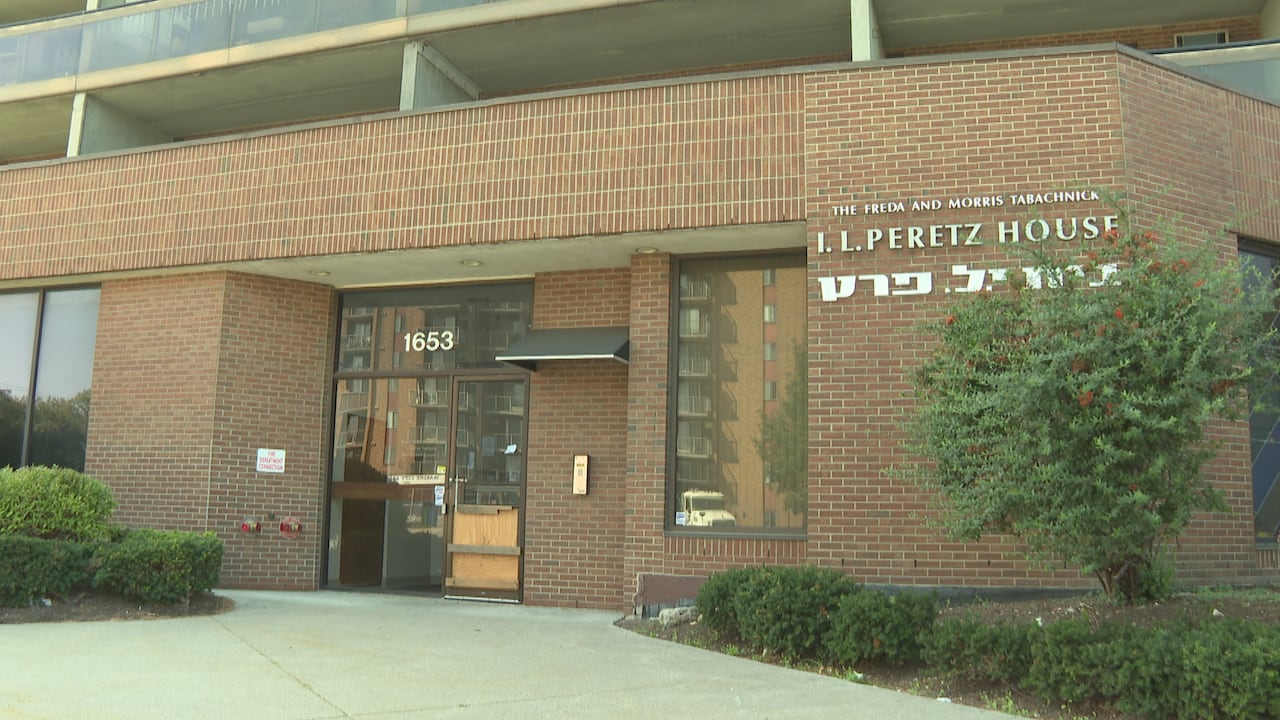
The front of the I.L. Peretz House in downtown Windsor. (Emma Loop/CBC)
“This situation impacts more than just the individual tenant,” stated Ghadeer Jwad, a paralegal representing the tenants and owner of JLaw Solutions. “While she was the first to receive an eviction notice, over 30 units have also seen similar rent increases.”
Berk has resided in the building for over ten years. The landlord, a non-profit entity connected to the Windsor Jewish Federation, typically provided her financial assistance that kept her rent around $450 monthly, as noted by the Board’s ruling this month.
However, last year, Berk was notified that her rent would increase to $700 per month — an increase exceeding 50 percent. While this amount is still considerably lower than the market rate, Berk contends that she cannot afford the new rent. She continued to pay her previous rent, leading to the issuance of the eviction notice.
“It is distressing to have to raise anyone’s rent,” Stephen Cheifetz, the head of the Windsor Jewish Federation, told CBC Windsor last year. “We would prefer not to if at all possible, but maintaining the building necessitates it.”
“Who bears the burden of rising property taxes? Who covers the increases in utility costs? Who manages the maintenance expenditures? We’ve been absorbing these costs, resulting in significant financial losses,” he added.
He mentioned that they were seeking eviction to demonstrate to tenants that there were repercussions for not paying the new rental rates, although they would not pursue actual evictions unless tenants caused disruptions or property damage.
Cheifetz, when contacted by phone last week, declined to comment on the Board’s recent ruling and ended the call.

Stephen Cheifetz, a lawyer and president of the Windsor Jewish Federation, at his work office on Monday, Sept. 22, 2025. (Mike Evans/CBC)
The landlord, the I.L. Peretz Senior Citizen Corporation, contended before the Board that the building qualifies as a designated housing project, thus exempting it from standard regulations, which last year capped rental increases at 2.5 percent.
On August 10, the Board acknowledged that the complex is a designated housing project. However, to be eligible for the exemption, the landlord needed to demonstrate that it was “owned, operated or managed by a service manager or local housing corporation.”
The Board member responsible for the case indicated that there was “no evidence before” her supporting that claim. Consequently, the limit of 2.5 percent applied for the previous year, and Berk’s 56 percent rent increase indicated in the eviction notice “appears to be illegal,” according to the Board’s order.
“The landlord cannot terminate the tenancy based on a defective Notice of Termination,” the order specifies.
-
Average asking rents are getting lower in many of Canada’s major cities — here’s how Windsor is doing
-
Essex County facing ‘transformational growth,’ warden says in State of the County address
The ruling granted the landlord until August 24 to “seek an order for arrears only,” which refers to the 2.5 percent of the 56 percent increase. It also stipulated that if the landlord failed to pursue such an order, the case would be dismissed.
Jwad indicated that the landlord had not taken this action. It remains uncertain if the landlord will pursue any further measures regarding the situation.
Nevertheless, Jwad noted that other tenants are now contesting their rent hikes before the Board, with a hearing scheduled for October.

Paralegal Ghadeer Jwad (left) and tenant Sylvia Berk examine a document at the I.L. Peretz seniors’ apartment building in Windsor, Ont., on Aug. 20, 2026. (Emma Loop/CBC)
She acknowledges that the landlord is grappling with increased operational costs and that the rental rates are low, but points out that these prices were established by the landlord initially.
“You set these rates, and tenants have been paying that amount,” she remarked. “To suddenly alter this and assert an exemption — the board ultimately disagreed.”
Sylvia mentioned that she has been trying to stay occupied during the legal proceedings to distract herself, but is feeling hopeful about the future.
“All the tenants in the building have been anxious and distressed, some of them,” she noted. “I would advise them to have faith and persevere because I believe things are looking up. I think we will find ourselves in a favorable situation moving forward where we can manage the rent.”