


Britain is facing growing worries about the potential for a nuclear attack as tensions escalate worldwide. RAF Lakenheath in Suffolk, under the United States’ operation, is expected to store US/NATO nuclear weapons soon, putting the UK at the forefront of potential conflict between the US and Russia.
The presence of American nuclear weapons on British territory significantly heightens the country’s risk of being targeted. Analysts suggest that in a wartime scenario, Lakenheath would likely be hit first before other areas in the country.
While experts acknowledge the global devastation a nuclear conflict involving the US, NATO, and Russia would bring, it’s crucial to understand the direct impact on British towns and cities. The Campaign for Nuclear Disarmament warns that a single nuclear strike on any urban area would have catastrophic consequences, with radioactive effects spreading far beyond.
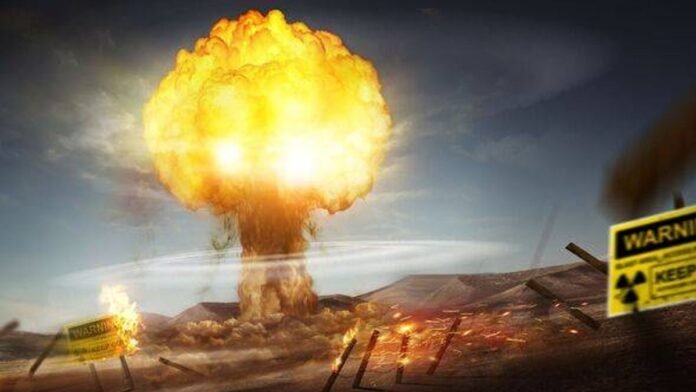
Their report highlights that a Russian warhead hitting London could result in nearly a million casualties, while Glasgow and Cardiff could face 326,000 and 196,000 fatalities, respectively. The center of a nuclear blast is estimated to reach temperatures of several million degrees, causing a heat flash that would destroy human tissue within a 1.5 square mile radius.
Reflecting on the 1945 bombings in Hiroshima, where atomic bombs wiped out a significant number of lives, the report projects that those within four miles of the blast in a nuclear attack would likely be killed by the explosion and ensuing fires. The heat would ignite structures, leading to a firestorm fueled by oxygen consumption.
The report further indicates that the immediate fatality rate within the blast zone would exceed 90%. Beyond the immediate impact zone, fatalities would gradually rise among survivors due to burns, amputations, blindness, and internal injuries. Emergency services would struggle to respond, overwhelmed by casualties and infrastructure damage.
In the days following the attack, survivors would face radioactive fallout, causing various health issues from hair loss to internal bleeding. Pregnant women and children of exposed individuals would be at high risk for complications and long-term health effects, including radiation-induced cancers.
The environmental and climatic ramifications of nuclear warfare could lead to widespread famine, affecting billions of people. The aftermath of a nuclear war could disrupt food production, potentially leading to global starvation on an unprecedented scale.