
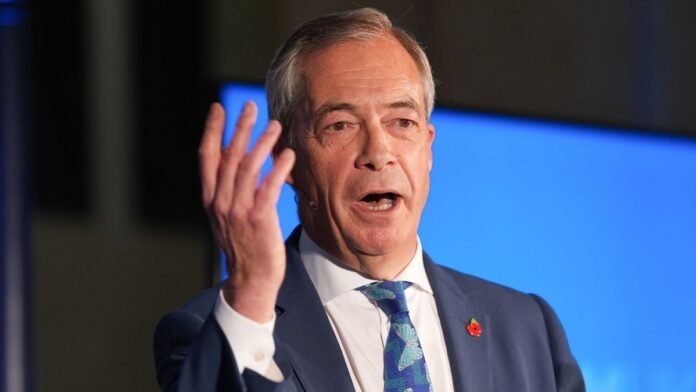


Nigel Farage is facing criticism for proposing significant cuts in public spending, with accusations of advocating a return to harmful austerity measures. During a recent address on the economy in London, the Reform leader refrained from endorsing the pensions triple lock, expressed skepticism about the minimum wage for young individuals, and emphasized intentions to reduce the welfare budget. Additionally, he abandoned his prominent £90 billion tax reduction plan following criticism from economists.
Following his speech, Farage was promptly criticized for outlining an “incoherent saloon bar budget” that was perceived to favor hedge funds and financial speculators over the welfare of workers. The Labour Party expressed concerns about Farage’s proposed austerity measures, warning of potential detrimental impacts on public services, including the NHS, schools, and pensions, as well as the cancellation of existing investments in local infrastructure and clean energy initiatives.
Reform UK’s agenda includes substantial cuts to the benefits bill, downsizing the public sector, and reassessing all disability claims through personalized assessments. Farage’s recent proposal to eliminate Personal Independence Payments for individuals with anxiety was met with severe backlash, described as “cruel, heartless, and reprehensible.” The party’s plans to reform the welfare system extend to face-to-face assessments for all claimants and the introduction of a “fast track to work” system for those undergoing benefit withdrawals, aiming to save £9 billion annually by 2029.
Farage reiterated his commitment to scrapping the government’s Net Zero policies, emphasizing the elimination of subsidies and reducing energy costs. This stance has drawn criticism for potentially endangering jobs in sectors like electric vehicles and green steel. Moreover, Reform UK’s pledge to cut foreign aid by half to fund tax cuts has stirred controversy, with ongoing debates over the viability and implications of such measures.