
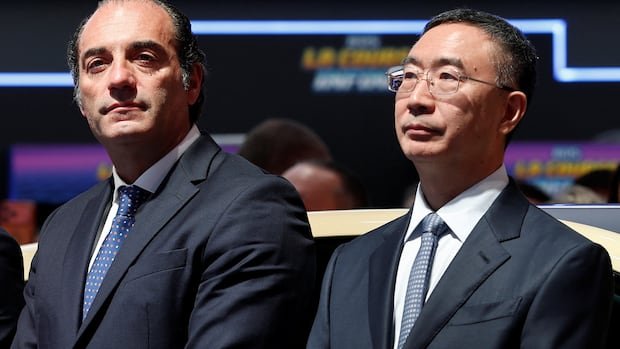


At the Paris auto show, Stellantis and Volkswagen showcased their confidence in electric vehicles, drawing inspiration from Chinese competitors and collaborators influencing the European auto market.
Both automakers are revamping their strategies to tackle the increasing competition from Chinese brands in Europe. Stellantis, comprising Citroen, Peugeot, Opel, and Fiat in Europe, is leveraging its partnerships with Leapmotor and Dongfeng to study Chinese technological advancements, according to Stellantis CEO Antonio Filosa.
Filosa emphasized the importance of collaboration to enhance capabilities and competitiveness. Stellantis has established production partnerships with Leapmotor and plans for another with Dongfeng to align with European manufacturing regulations.
The shift towards electric vehicles in Europe has accelerated due to factors like fuel price hikes and the availability of affordable models from Volkswagen and Stellantis. These mass-market brands are striving to maintain their market share against rapidly expanding Chinese rivals seeking growth outside their domestic market.
Stellantis and Leapmotor are jointly developing a mid-sized electric SUV, showcasing a swift collaboration between a Western and Chinese automaker. However, industry experts like Felipe Munoz stress the urgency for Stellantis to focus on production rather than just concept vehicles to keep pace with the evolving market.
Volkswagen’s transformation has been influenced by China, with CEO Oliver Blume likening it to a “fitness center” for the industry. While Volkswagen’s partnership with Xpeng primarily targets the Chinese market, potential collaborations in Europe remain speculative.
Blume expressed contentment with Volkswagen’s current strategies in China and indicated no immediate need for a Chinese joint venture in Europe. Analysts note that while Volkswagen concentrates on Chinese partnerships, Stellantis’ successful alliance with Leapmotor is setting a benchmark in Europe.
Acknowledging China as a key influencer, European automakers are learning from Chinese counterparts, marking a shift where the student has become the teacher in the automotive industry’s global dynamics.