
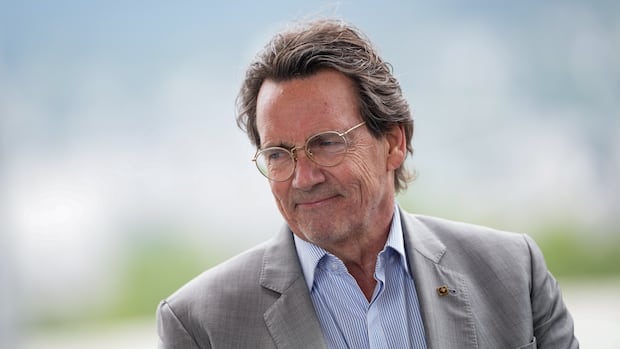


Quebecor Inc. CEO Pierre Karl Péladeau is advocating for his company’s $31-billion offer to acquire Telus Corp., addressing worries about competition within Canada’s telecommunications industry by emphasizing the declining costs of wireless plans and the expansion efforts of foreign firms.
During an interview on Rosemary Barton Live that aired Sunday morning, Péladeau stated, “Telecom assets hold strategic importance for our nation — this is widely recognized. Consequently, we must ensure that we are on equal footing.”
The Montreal-based telecommunications, media, and entertainment firm announced on Monday that it presented a non-binding bid to Telus in June to initiate negotiations, and that the Vancouver-based company is currently evaluating an improved proposal submitted by Quebecor earlier this month.
This initiative by Quebecor follows the federal government’s approval three years ago of Rogers Communications’ acquisition of Shaw Communications, which was contingent upon the sale of Freedom Mobile to Quebecor to maintain a four-player market.
Péladeau shared with CBC’s chief political correspondent Rosemary Barton that his company has been effectively serving Freedom Mobile and the Canadian market, noting that “our results speak for themselves. We are eager to continue achieving the same success with the Telus assets.”
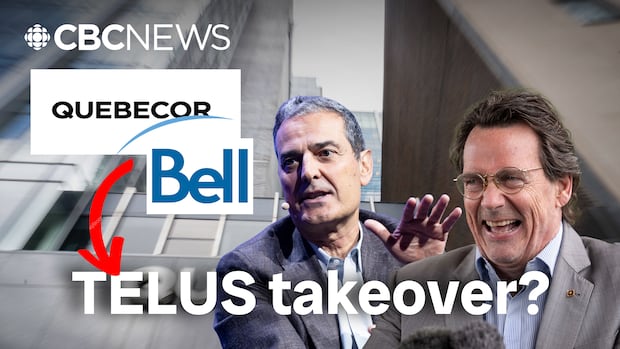
Quebecor has launched a massive $31-billion bid to take over Telus, a move that would crown it Canada’s largest telecom company — and potentially shrink the wireless market back down to three major players in B.C. The CBC’s Lien Yeung breaks down why Telus is pushing back and what this blockbuster merger could mean for your monthly phone bill.
When questioned about how such a merger might influence wireless expenses for Canadians, Péladeau pointed out that prices have been decreasing since his company took over Freedom Mobile.
<p"Our earnings and free cash flow are on the rise," he stated. "What would prompt a change to a successful strategy?"
As per Canada’s annual telecom report, consumer prices for wireless services have fallen in recent years but saw a slight increase in 2025. Canada still ranks among the highest for wireless pricing compared to other developed nations.
Currently, Quebecor stands as Canada’s fourth-largest telecom entity. With a market capitalization of $14.77 billion and Telus at $21.72 billion, this potential transaction would place Quebecor above Rogers or Bell in size by that measure.
Péladeau also positioned the suggested acquisition as a means to safeguard Canada’s sovereignty, referencing Elon Musk’s satellite internet service Starlink, which is already servicing parts of Canada and is expected to seek further expansion.
“[Starlink’s] business model operates globally, similar to how Netflix’s model did,” Péladeau remarked, adding that Netflix “disrupted a Canadian industry” without holding a license from the Canadian Radio-television and Telecommunications Commission (CRTC).

Quebecor is currently Canada’s fourth-largest telecom company, with a $14.77-billion market capitalization. (Christopher Katsarov/The Canadian Press)
Telus announced it has established a special committee to assess the proposal and evaluate the deal’s potential value. John Manley, chair of Telus’s board of directors, indicated in a statement released by the company on Monday that the committee has identified several “significant risks.”
Moreover, Telus has expressed concerns regarding how the Quebecor proposal values its own company.
Manley stated that Telus plans to keep engaging with Quebecor, the government, and regulatory bodies to address these issues while also considering alternative options.
The federal perspective so far
In its news release on Monday, Quebecor recognized that the deal will require approval from Canada’s Competition Bureau, as well as other agencies like the CRTC and Innovation, Science and Economic Development Canada.
This past week, Prime Minister Mark Carney stated that enhancing competition, reducing prices, and improving service quality would be essential factors in any decisions related to the telecom industry.
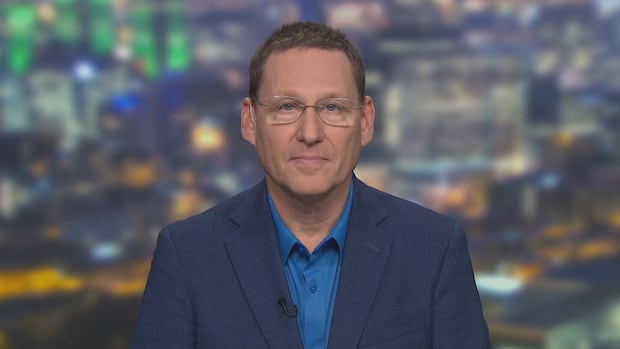
NDP Leader Avi Lewis joins Power & Politics after Montreal-based telecommunications company Quebecor announces its $31-billion bid to acquire competitor Telus. Critics of the potential deal are calling on the federal Competition Bureau to block the sale, saying it will increase costs for consumers and trigger layoffs.
Carney refrained from directly commenting on Quebecor’s offer but mentioned that under specific conditions, an oligopoly could foster more competition despite fewer players, without elaborating further.
Péladeau expressed his belief that most would agree with Carney’s remarks, highlighting that there would still be competitive forces, such as Starlink, even with just three Canadian companies.
On Friday, Conservative Leader Pierre Poilievre stated that his party has yet to assess the proposal but will review it based on the principle of reducing consumer costs.
Poilievre also criticized Carney’s comments, asserting that he has never encountered “any economist anywhere in the world claim that oligarchies ultimately lower prices… Once again, Mr. Carney prioritizes corporate power brokers over consumers.”
NDP Leader Avi Lewis has urged the Competition Bureau to reject the sale, arguing that it will raise costs for consumers and lead to job losses.
“We already face some of the highest cellphone rates globally,” he remarked. “It is evident to most people suffering from this cost-of-living crisis that this is just another instance where major players are allowed to consume another company.”