
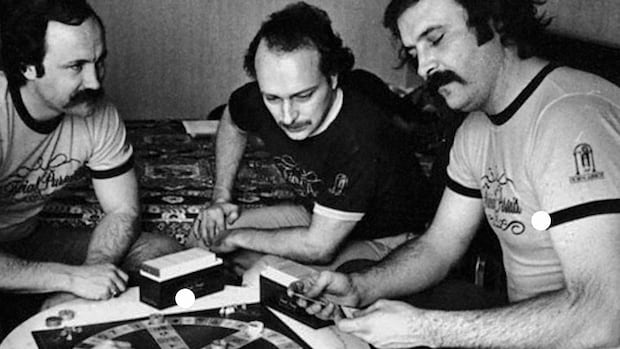



Scott Abbott recalls the moment vividly.
On a rainy Saturday, December 15, 1979, in Montreal, his roommate Chris Haney returned from a grocery run with a Scrabble game.
The duo was preparing for a Scrabble battle, but the game’s $11 price prompted a discussion that would change their lives forever.
“There must be a lot of money in games,” Abbott remembers Haney suggesting. “Why don’t we create a game?”
Abbott mentioned one word: trivia.
The concept wasn’t completely out of the blue. At the time, Abbott was working as a sports journalist for The Canadian Press, while Haney served as a photo editor for the Montreal Gazette. They frequently spent late nights at the Press Club exchanging trivia questions.
Thus, Abbott picked up a pencil and a piece of paper, seated himself at the kitchen table, and began to brainstorm.
This marked the inception of Trivial Pursuit, a general-knowledge board game that evolved into a worldwide cultural sensation.
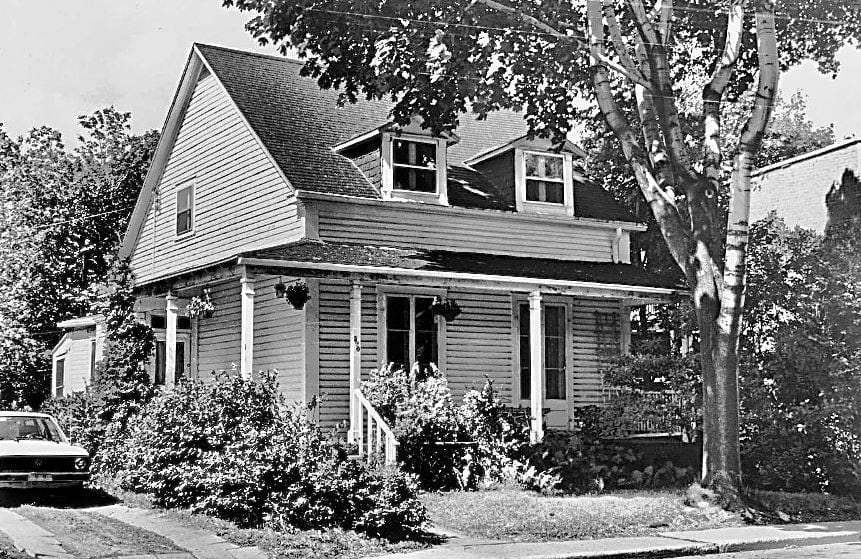
An archival image of 270 Landsdowne Ave. in Montreal where the idea for Trivial Pursuit was birthed on Dec. 15, 1979. (Submitted by John Haney)
The best-selling Canadian board game in history has sold over 100 million copies in 17 different languages. The game also led to television adaptations and generated substantial profits for its four creators—Abbott, Haney, his brother John Haney, and their lawyer friend Ed Werner. Early investors who contributed merely $1,000 saw their investments grow to over $1 million, according to Abbott.
John Haney, now 80, shares a personal narrative of the game’s development in his new book, My Trivial Pursuits: The Inside Story of the Board Game That Conquered the World, published for the game’s 45th anniversary.
“It’s a legacy for my children and grandchildren to truly understand what transpired,” Haney told Piya Chattopadhyay on The Sunday Magazine.
A game that spans generations
Abbott expresses that he and the other founders were “astonished” by the game’s popularity.
“At first, we were shocked. We believed the game would resonate solely with our generation, the baby boomers, but soon realized it appealed to everyone from children to seniors,” he remarked.
Earl Holland Jr. from Salisbury, Maryland, reflects on his childhood experiences playing Trivial Pursuit with his older sisters at the age of five in a home that was captivated by Wheel of Fortune and Jeopardy.
A trivia aficionado who “read encyclopedias” for enjoyment, Holland Jr. recalls being attracted to the game’s “exciting pace” and “knowledge enhancement.” Years later, that initial intrigue culminated when he became a contestant on the American television version of the board game, hosted by LeVar Burton. His episode aired in late October.

Earl Holland Jr., far right, standing beside other contestants and host LeVar Burton, second from left, for the taping of an episode on the second season of The CW’s Trivial Pursuit game show, on October 10, 2025. The episode aired on October 22, 2026. (submitted by Earl Holland Jr.)
For Holland, the enduring charm of Trivial Pursuit lies in its adaptability and its capacity to unite people—along with its perfect timing.
“Its emergence coincided almost exactly with the revival of quiz shows like Jeopardy,” Holland explained. “It’s a communal experience. The ability to transcend generations and remain relevant is significant for various audiences, regardless of age.”
And according to the game’s creators, that was the intended goal.
“A professor can compete with a street sweeper. They engage on equal footing,” Haney remarked.
This widespread appeal may have been ingrained in the game from its inception.
From kitchen table to worldwide sensation
Michael Wurstlin was a 26-year-old freelance graphic designer when Haney and Abbott approached him in 1979, presenting a piece of cardboard adorned with glued-on paper scraps and requesting him to create the design for their board game.
Wurstlin subsequently developed the iconic board design and scroll logo for the original Trivial Pursuit Genus edition, in exchange for five shares in the company.
However, he wasn’t immediately convinced the venture would be successful.
“They were quite disheveled, chain-smoking, and I’m pretty sure they were intoxicated half the time,” Wurstlin recalled.
Nevertheless, he believes their irreverent, anti-establishment attitude was precisely what distinguished the game.
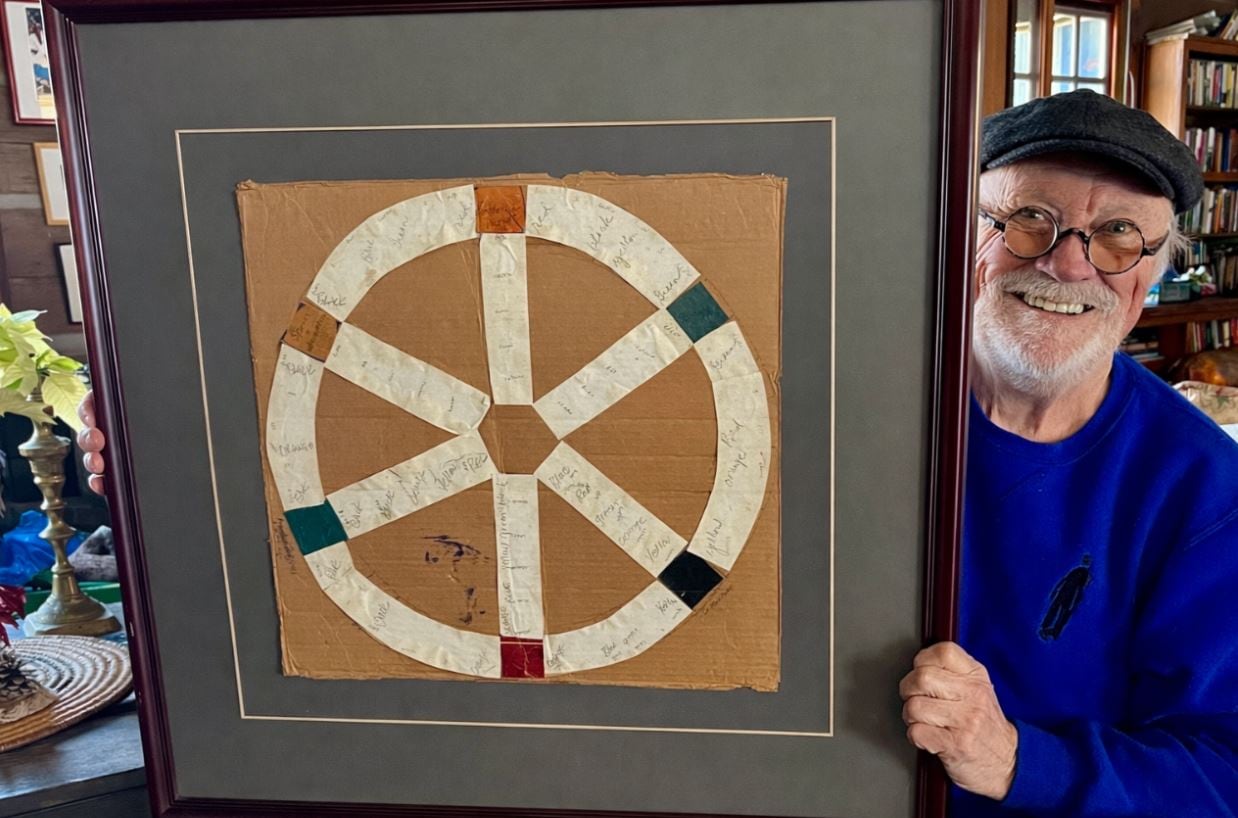
One of the co-creators, John Haney, pictured with the original mockup for Trivial Pursuit, presented to graphic artist Michael Wurstlin in 1979. (submitted by John Haney)
Beneath that relaxed demeanor, however, was a nearly obsessive dedication to ensuring the accuracy of the questions.
“It became an all-consuming passion,” Abbott reminisced, describing how they searched through everything from newspapers and magazines to television, films, and books for information. “We couldn’t even have lunch without reading a ketchup bottle to see what questions might be found on it.”
In an era before Google, confirming the answers to all 6,000 questions required tedious double-sourcing. Even so, Abbott mentions that the first print run contained errors.
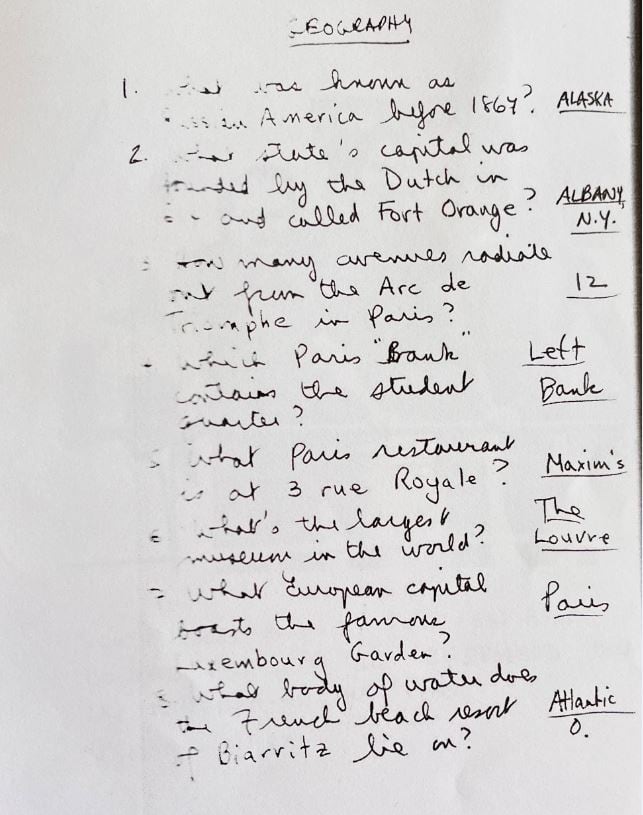
The first eight of thousands of questions John Haney wrote for the first edition of Trivial Pursuit. (submitted by John Haney)
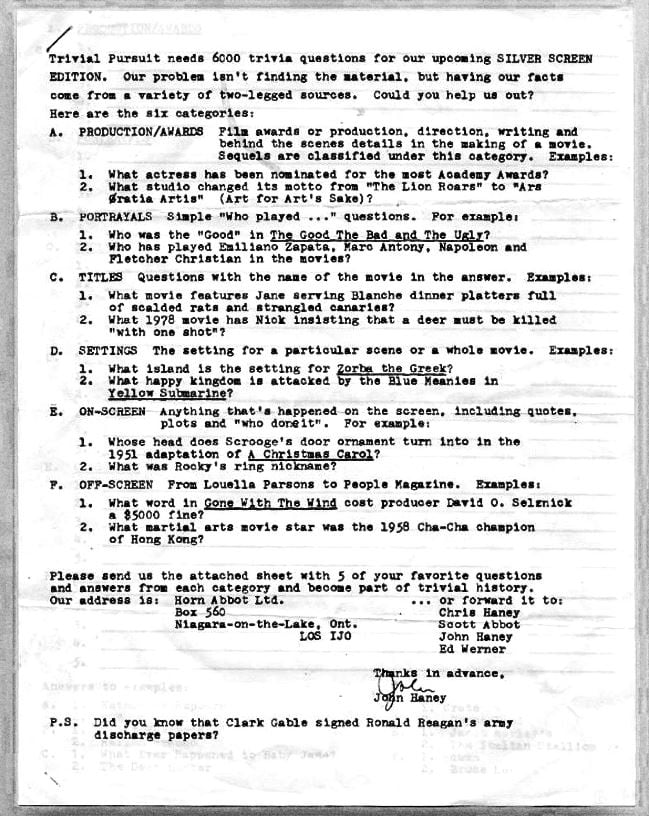
A copy of a letter the Trivial Pursuit creators wrote to their shareholders asking for help selecting their “five favourite questions and answers.” (Submitted by John Haney)
Getting the game onto store shelves proved equally challenging.
After facing numerous rejections, in 1981, a couple of shops in Niagara-on-the-Lake, Ontario, finally decided to take a chance on the nascent game.
There was nothing like seeing that game on a shelf. It felt like a dream realized.John Haney, Co-creator of Trivial Pursuit
Demand quickly surpassed expectations. Soon, customers were queuing up outside Toronto’s famous toy store, Mr. Gameways’ Ark, eager to buy a copy.
“We sold around 1,200 games in less than two months before Christmas of ’81,” Abbott stated. “By September 1982, we had sold 20,000.”
They secured a Canadian distribution agreement with Chieftain Products Inc., which held the rights to Scrabble in Canada at that time, followed by an American distribution contract with game manufacturer Selchow & Righter.
This partnership propelled Trivial Pursuit from a local favorite to a global phenomenon.
By 1984, approximately 20 million games had been sold in the United States alone.
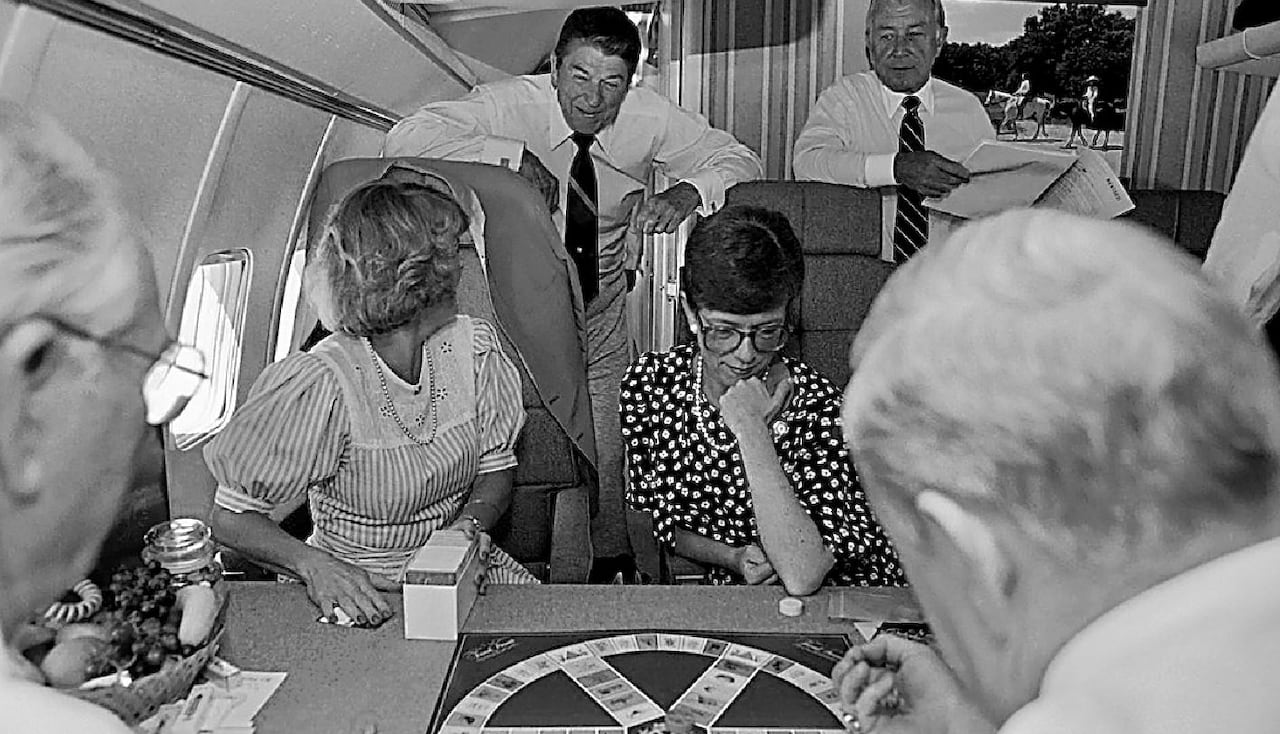
Former U.S. president Ronald Reagan and others play Trivial Pursuit aboard Air Force One in 1985. (submitted by John Haney)
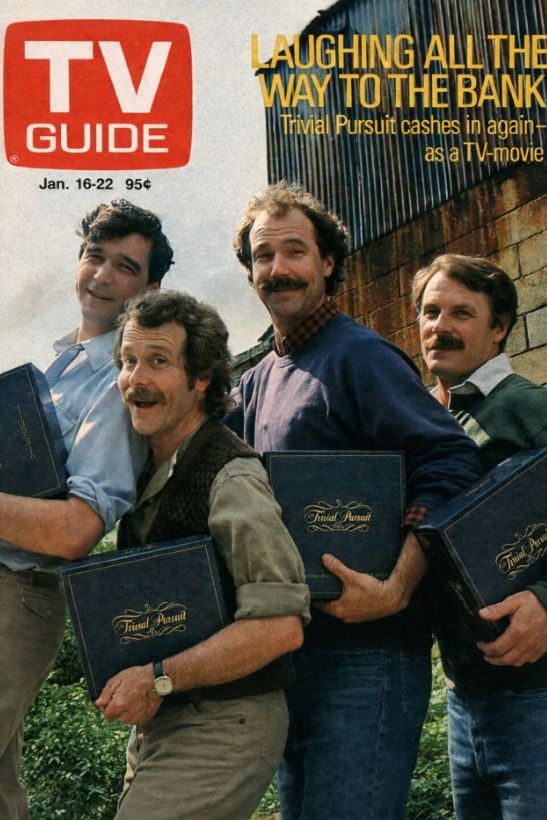
A 1988 TV Guide cover featuring all four of Trivial Pursuit’s creators, promoting a TV movie based on their story, which was featured on CBC. (submitted by John Haney)
Abbott recalls realizing the extent of their fame during a 1985 media tour in Australia.
“We were at the zoo in Melbourne, walking down a path when some kids, about ten years old, turned around and exclaimed, ‘Look, it’s the Trivial Pursuit guys!’ They were all excited and crowding around us,” he recounted.
According to the Canadian Museum of History, Trivial Pursuit played a significant role in igniting a board-game surge in the 1980s and ’90s, encouraging Canadian inventors to pursue similar achievements. However, few managed to reach such heights.
Haney stated that the choice to sell to Hasbro in 2008 was straightforward.
“It had grown too large, and our creation had taken on a life of its own.” Haney expressed that Hasbro continued to develop the game, introducing new editions that he and his co-founders would not have had the capacity to manage on their own.
“So we were quite pleased to sell it. We celebrated with a few beers that day.”