
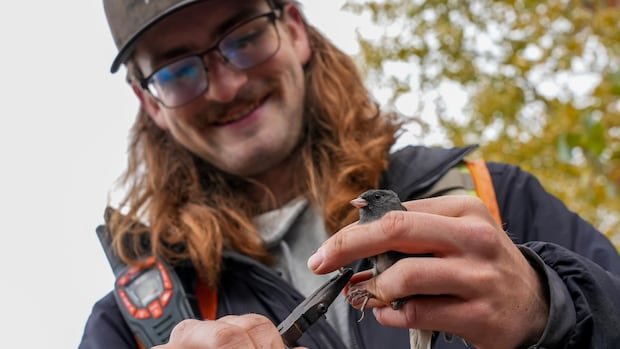


In the midst of the boreal forest, Ethan Denton, a Calgary-based ornithologist spending his summer in Fort McMurray, Alta., stands by a network of nets. Carefully handling a dark-eyed junco, a small, dark grey songbird, Denton attaches a light aluminum band with an identification number to the bird’s slender right leg using pliers. Gender and measurements are recorded before releasing the junco, contributing to a broader understanding of its migration patterns by researchers across North America.
Wood Buffalo Wildlife Research Institute (WBWRI), founded by Ken Foster, is a unique non-profit organization in Fort McMurray dedicated to long-term monitoring of birds in the oilsands region. Foster emphasized the importance of programs like this in identifying and addressing the decline of bird populations through comprehensive research efforts.
Foster’s research, conducted in collaboration with the institute, reveals varying responses among bird species to changes in the oilsands region over the past decade. Some species, like the least flycatcher and northern waterthrush, have seen significant declines due to habitat alterations caused by wildfires, industrial developments, and other environmental changes affecting their migration routes. Conversely, adaptable ground feeders such as clay-colored sparrows are thriving in disturbed habitats that have been reclaimed or regenerated post-wildfires.
The WBWRI’s mission extends beyond bird banding, encompassing an array of initiatives such as automated tracking towers for animals fitted with radio transmitters, monitoring bat populations, and training volunteers in wildlife rehabilitation. Foster aims to secure funding for tagging birds with radio transmitters, highlighting the organization’s commitment to comprehensive wildlife research and conservation efforts.
Local studies and initiatives like those led by Foster play a crucial role in monitoring and addressing ecological changes in the Fort McMurray region and along migration routes. By integrating local data with national databases, researchers can effectively identify and communicate local environmental concerns to relevant stakeholders, including government agencies and industry partners.
The WBWRI’s holistic approach to wildlife research and conservation efforts not only sheds light on the challenges faced by bird populations but also underscores the significance of community engagement and citizen science in fostering a deeper understanding of local ecosystems and promoting conservation awareness.