
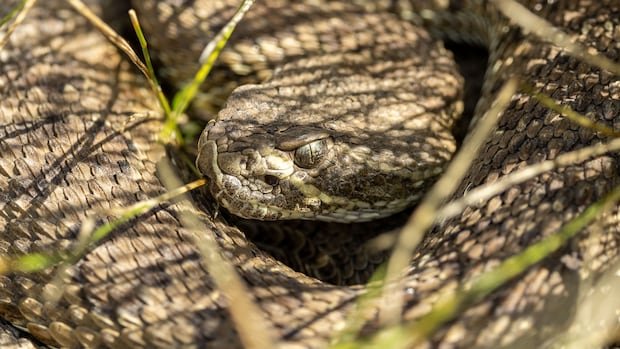


In a bustling year for the rattlesnake specialist in Lethbridge, Ryan First Diver has been actively addressing 70 percent of inquiries received through the City of Lethbridge’s hotline concerning snakes on public premises. The city’s established rattlesnake management initiative involves relocating snakes from public areas to their natural habitats, including den sites, wintering areas, or places where they give birth.
This year, 211 snakes, including rattlesnakes and bullsnakes often mistaken for rattlers due to their similarity, have been relocated as of the latest count. Describing it as an “all-time record,” First Diver shared this information with CBC News. The City of Lethbridge typically receives around 150 to 160 snake-related calls annually, as noted by City of Lethbridge senior bylaw officer Dave Henley, who also responds to such requests.
First Diver highlighted the increased community awareness about snakes, attributing it to his social media posts over the years. This heightened awareness has led to a more informed populace that now actively shares knowledge about snake encounters and where to seek assistance.
Dispelling common misconceptions, First Diver emphasized that rattlesnakes are not inherently aggressive. He mentioned that snakes generally avoid confrontation and only strike when cornered or threatened, advising people to remain composed if they encounter a rattlesnake.
Stefano Liccioli, a senior biologist with Alberta Environment and Protected Areas, reiterated that while rattlesnakes are venomous, incidents of snake bites in Alberta are exceedingly rare. Liccioli emphasized that snakes bite primarily for feeding purposes and not out of aggression towards humans.
The increasing number of snake-related calls in Lethbridge might indicate a rise in snake population or heightened public awareness, according to Liccioli. Efforts are underway to study rattlesnake populations in Alberta, with some snakes being tagged for tracking movements and den locations.
Liccioli anticipates obtaining substantial data on Alberta’s snake population trends within the next decade, aiming to assess the impact of environmental factors and conservation efforts on snake populations and potentially adjust conservation measures accordingly.