
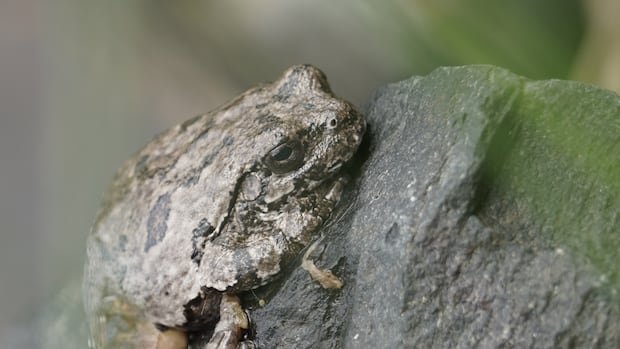


Thickened skin shedding from sluggish frogs and toads in small pieces. Struggles with respiration and feeding. Immune system attacked, leading to shutdown.
These are common symptoms of chytridiomycosis, a deadly fungal disease known as an “epidermal epidemic” causing the extinction of numerous amphibian species globally.
Although not yet detected in the central province of Canada, this does not necessarily mean it is absent in Manitoba.
According to Jackie Tran, a graduate student conducting frog and salamander sampling in southern Manitoba, the pathogen is widespread on the continent, indicating its likely presence in the province.
Chytrid in frogs is caused by the fungus Batrachochytrium dendrobatidis, while in salamanders, it is caused by Batrachochytrium salamandrivorans, believed to have originated in East Asia and decimated local salamander populations in parts of Europe in recent years.
The disease has not crossed over to North America as far as scientists are aware.
Chytrid is directly responsible for the extinction of at least 90 species and a decline in numbers of over 500 others, making it one of the most damaging infectious diseases among vertebrates.
Recent studies have found chytrid presence in Alberta frog populations and one in ten amphibians sampled in British Columbia, with northern leopard frogs being particularly affected.
The decline of the leopard frog population in Manitoba, historically one of 16 amphibian species in the region, raises suspicions that chytrid may have played a role in a significant decrease in numbers several decades ago.
While the disease is considered a plausible cause, it remains speculative due to the lack of concrete evidence from past incidents.
Tran warns that the current designation of Manitoba as chytrid-free may not accurately reflect the conservation efforts in the province, with confirmed cases in neighboring regions like Ontario, the Northwest Territories, North Dakota, and Minnesota.
The risk to amphibians in the Prairies is believed to be escalating, especially with changing environmental conditions and climate.
Tran’s research at Brandon University marks the initiation of a proactive monitoring program, aiming to identify potential habitats where pathogens could thrive, with the hope of mitigating population declines.
The health of wetlands, where pathogens spread rapidly due to human activity, plays a crucial role in preserving amphibian populations and overall ecosystem health.
Results from field experiments indicate the potential for inoculating young leopard frogs against the effects of chytrid, offering hope for the conservation of these species.
Tran’s work and the ongoing monitoring program at Brandon University may provide vital insights and strategies to prevent further declines in amphibian populations in Manitoba.