
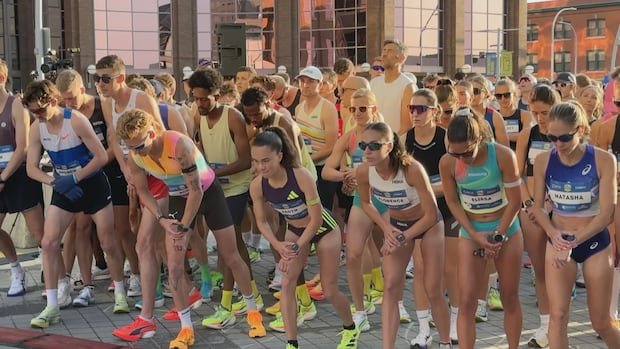


Two days post the conclusion of the Edmonton Marathon, the event’s director issues an apology following the revelation of an error in accounting for detours, resulting in the race courses being longer than intended. This acknowledgment validates the suspicions of many runners.
In a statement released on Tuesday, Tom Keogh, the Edmonton Marathon race director, disclosed that both the half-marathon and marathon courses were measured 674.7 meters longer than initially estimated. Keogh expressed regret for the oversight, attributing it to miscalculations in adjusting the course due to detours.
Keogh took full responsibility for the error, emphasizing the thorough review conducted by event officials. Prior to this announcement, concerns about the race distances had been raised by elite and amateur runners alike. Several runners asserted they had covered more distance than expected.
Despite initial claims of accurate course measurement and confirmation on race day, Keogh admitted to an error occurring in the process. The national governing body for athletics, Athletics Canada, had expressed confidence in the course certification process but had yet to issue a statement in response to the updated position of the Edmonton Marathon.
Acknowledging the race’s significance as a qualifier for prestigious events like the Boston Marathon, Keogh assured participants that efforts were underway to address the impact of the error on this year’s results. The situation has left runners like Mitch Walz, who aimed for a Boston Marathon qualifying time, feeling emotionally conflicted after achieving a significant personal milestone only to have it potentially invalidated.
Looking ahead, Keogh pledged to review certification processes to prevent similar errors in the future. Meanwhile, the Boston Athletic Association clarified that adjusted results would not be accepted if the distance exceeded or fell short, but runners who exceeded the required length while meeting the qualifying time could still be considered for the marathon.