
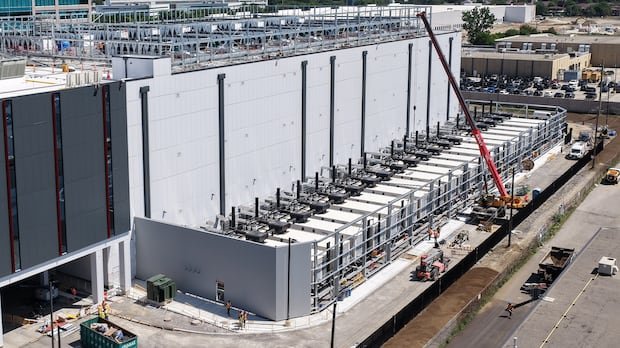


Ontario Premier Doug Ford unveiled the province’s new framework for data centers, emphasizing the importance of keeping Canadians’ data within the country. This framework focuses on three main pillars: economic development, data protection and sovereignty, and community investment and public trust.
Ford, speaking in Guelph during the announcement, highlighted the significance of the new data center playbook in fostering economic growth, increased tax revenues, job creation, and ensuring compliance with regulations. The framework mandates that data centers cover the entirety of their electricity usage costs, encouraging self-sustainable power generation. Additionally, a distinct rate class will be established for large new data centers, set higher than existing industrial rate programs, to prevent cost burdens on Ontario families.
The province clarified that it will not provide financial incentives to attract investments, with the framework identified as a pivotal enabler of its artificial intelligence (AI) strategy. The AI strategy aims to bring substantial economic growth, projecting $122 billion by 2035 and the annual creation of 17,000 new jobs.
The announcement coincides with municipalities in Ontario considering moratoriums on data centers, with Oakville recently enacting a one-year pause and Mississauga set to vote on a moratorium in September.
Green Party of Ontario leader Mike Schreiner and Ilham Abdulkadir from Wellington Water Watchers expressed concerns about the environmental impact of data centers and called for stronger regulations, including the use of closed-loop water systems. Vic Fedeli, Ontario’s minister of economic development, assured that priority would be given to data centers employing closed-loop systems to reduce water consumption.
While acknowledging the importance of data centers in the future, Schreiner emphasized the need for community control and stringent regulations to protect against potential negative impacts. He emphasized the Green Party’s call for a moratorium until robust regulations are in place.
In response, Ford stressed the necessity of data centers for various sectors and encouraged understanding of their role in modern society. The Premier pledged to prioritize data centers with closed-loop systems to address water consumption concerns.
The province is focused on balancing economic growth with environmental sustainability and community well-being. The discussion surrounding data centers and their impacts continues to evolve, with a report expected to be completed by the Region of Waterloo council early next year.