
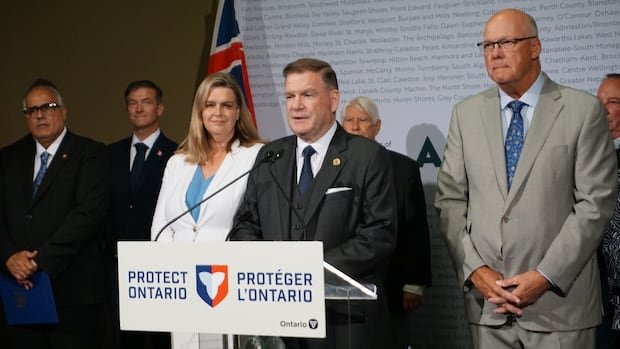


The governments of Ontario and Canada have allocated $1 billion to assist municipalities that do not impose development charges in enhancing and maintaining essential infrastructure. During the Association of Municipalities of Ontario (AMO) conference in Ottawa, Ontario’s acting minister of infrastructure, Todd McCarthy, along with Rob Flack, Ontario’s minister of municipal affairs and housing, and Jennifer McKelvie, parliamentary secretary to the federal minister of housing and infrastructure, unveiled the initiative.
Under the newly established Municipal Housing Infrastructure Program (MHIP), each government level is contributing $500 million. This initiative, known as the “non-development charge municipalities stream,” aims to support communities in funding infrastructure such as bridges, roads, and water systems to facilitate new housing construction and safeguard existing housing stock.
McCarthy expressed optimism about the collaboration between federal and provincial governments and municipalities, emphasizing the positive outcome of such partnerships. Initially, it was stated that the $1 billion funding was separate from the $8.8 billion previously committed by both governments in March, but it was later clarified that the new funding is part of the existing agreement.
Notably, the Ontario government has already earmarked up to $1.5 billion for the City of Toronto to offset the reduction in development charges. Similarly, the City of Ottawa plans to slash development charges by 54% to access $478 million in infrastructure funding.
Premier Doug Ford highlighted the high demand for funding among municipalities and encouraged further reductions in development charges, pledging additional support if needed. The first round of applications for the new funding stream will open on October 29, with project selections expected in the spring.
Mississippi Mills Mayor Christa Lowry, chair of the Rural Ontario Municipalities Association (ROMA), lauded the initiative, emphasizing its significance for numerous communities across the province. Lowry pointed out that out of Ontario’s 444 municipalities, over 200 do not collect development charges, highlighting the readiness of these areas for growth.
Additionally, the funding stream aims to boost local economies amid the uncertainties posed by U.S. tariffs, addressing key challenges faced by municipalities in infrastructure development. Robin Jones, outgoing president of AMO and mayor of Westport, Ontario, commended the move, particularly underscoring the difficulties faced by rural, small, and northern communities in managing infrastructure pressures.
The Ontario Big City Mayors (OBCM) group reiterated concerns about addressing homelessness and addiction crises, urging the province to take more robust actions. The group advocated for the creation of a dedicated ministry for addictions, expansion of treatment options, and a review of relevant legislative acts to enhance crisis response.
Burlington Mayor Marianne Meed Ward, chair of the OBCM, emphasized the importance of exploring comprehensive solutions to the ongoing challenges and planned discussions with provincial officials during the AMO conference in Ottawa, where Premier Doug Ford is scheduled to deliver an address on Monday.