
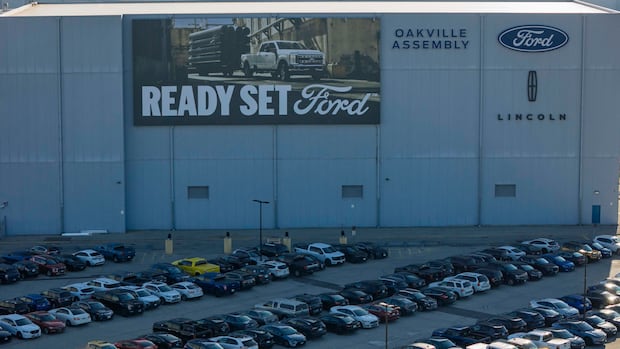


Ford Motor Co. is placing its confidence in the Oakville, Ontario, assembly facility as a key player in its growth strategy, showcasing the company’s dedication to long-term manufacturing in Canada.
The official reopening of the site is set for Friday, following extensive renovations aimed at prepping for the production of the F-Series Super Duty pickup truck. This significant milestone comes after two years of construction work.
“The scale of this project was truly significant,” stated Bev Goodman, president and CEO of Ford of Canada, during an interview.
“We effectively stripped it down to its core structure. Everything previously in the plant was removed.”
The retooling effort is part of a $5 billion investment, which also includes funding for Ford’s inaugural stamping facility in Canada. Stamping refers to the process of shaping flat metal sheets into designated forms.
-
Honda Canada announces plans to retool Alliston, Ont., plant for hybrid production
-
Feds, Ontario offering Stellantis ‘aggressive package’ to keep Brampton auto plant open
A new structure has been erected on previously vacant land, designated for stamping all body panels and parts for the truck. Additional funds were allocated to Ford’s Windsor operations, including the expansion of its Essex engine plant to support the production of its 7.3-litre engine series.
Ford revealed its plans to manufacture Super Duty trucks at the Oakville facility in July 2024, indicating that this shift would enhance production capacity by up to 100,000 units and generate nearly 2,000 jobs at the site. The automaker also produces Super Duty vehicles at its plants in Kentucky and Ohio but required a third location to “satisfy customer demand,” according to Goodman.
She noted that the Oakville site was a logical choice after the cessation of Lincoln Nautilus and Ford Edge production there.
“When we make investments, we consider their long-term potential,” she emphasized.
“While the future trade landscape is uncertain, we recognize Canada as a crucial component of Ford’s global operations.”
Goodman mentioned that Ford commenced vehicle shipments from the facility two weeks ahead of schedule.
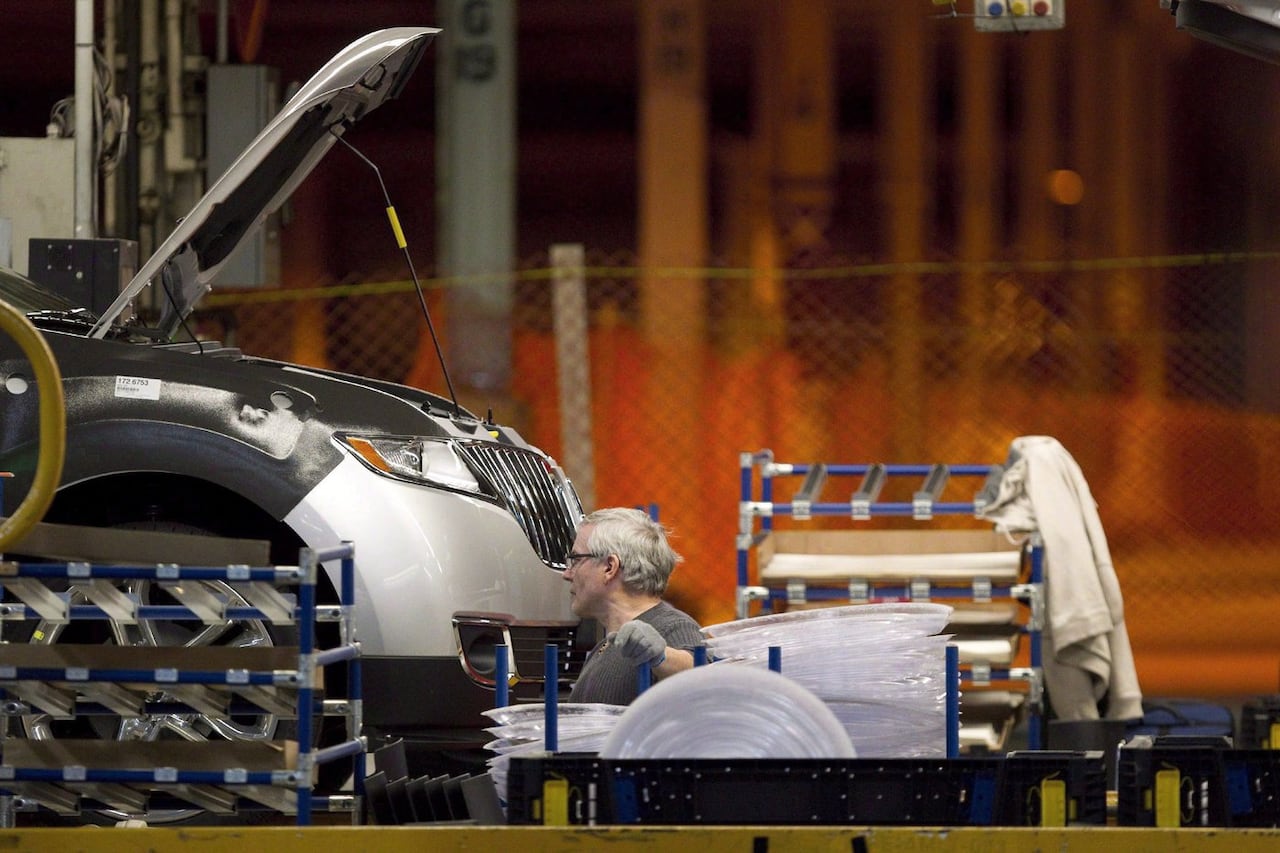
Ford announced its plan to assemble the Super Duty trucks at the Oakville plant in July 2024, saying the move would add capacity of up to 100,000 additional units and create nearly 2,000 jobs at the facility. (Chris Young/The Canadian Press)
On Friday, Premier Doug Ford, federal Industry Minister Mélanie Joly, and Unifor national president Lana Payne were expected to attend the celebration of the reopening, which follows a recent ratification of a new collective agreement by Ford employees.
During summer contract discussions with the automaker, Payne commended the retooling effort, as Unifor selected Ford as its target for initiating contract negotiations within the automotive sector. Agreements have been reached with Ford and General Motors, while discussions with Stellantis remain unresolved following that company’s sale of its Brampton, Ontario, manufacturing facility to defense contractor Roshel.
“The negotiations were very cooperative,” Goodman remarked.
The three-year contract included wage increases and job security provisions, along with the renewal of a no-closure agreement and program commitments across all Ford locations.
Retool signals move away from electric vehicles
The transformation of the site to produce pickup trucks represents a departure from the original intention to manufacture electric vehicles in Oakville. Ford had earlier unveiled a $1.8 billion plan to convert the facility into a center for EV manufacturing, which would encompass vehicle and battery pack assembly. After initially planning to begin EV production in 2025, the company has delayed this timeline to allow the consumer market to evolve and to facilitate further advancements in EV battery technology.
Shifting focus to Super Duty production means some workers will return to their jobs a year sooner than anticipated.
Other automotive manufacturers have similarly paused EV project initiatives in Canada due to weak demand.
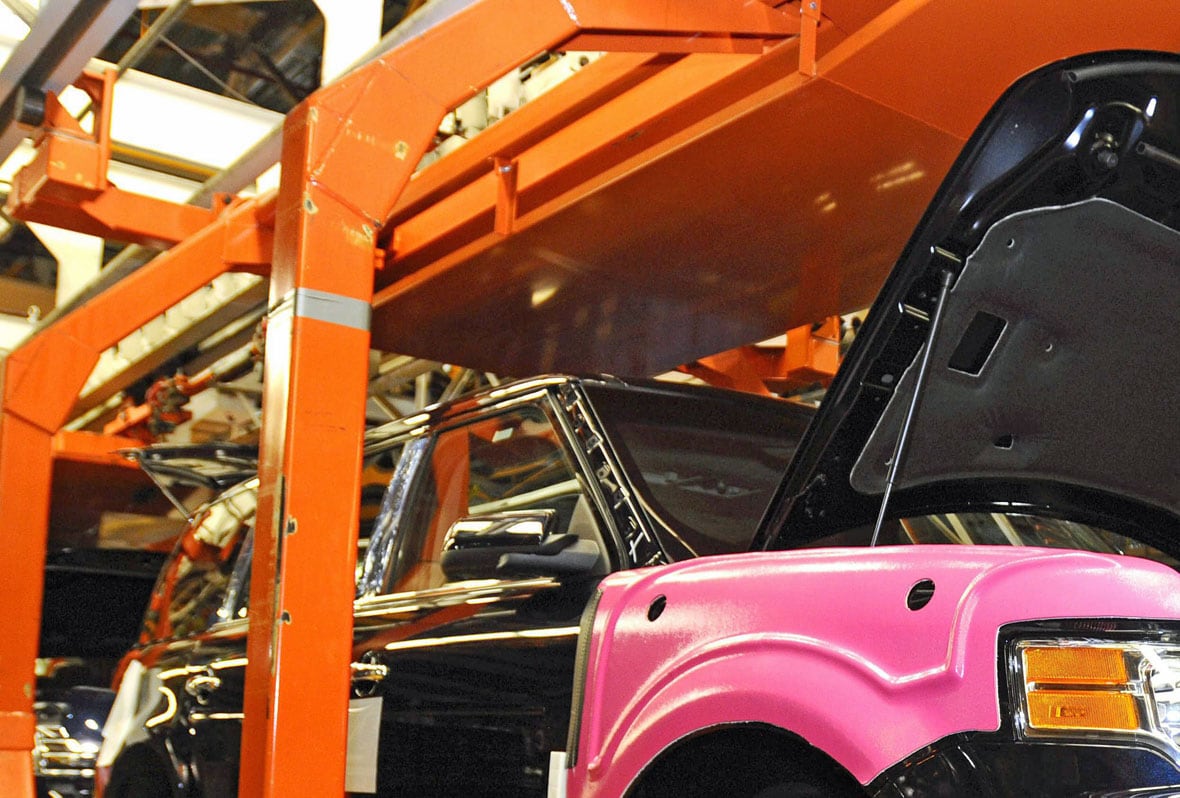
Transforming the site to build pickup trucks marked a shift from initial plans to produce electric vehicles in Oakville. (Sam VarnHagen/Ford Motor Co.)
Earlier this year, Honda Motor Co. paused its development of a $15 billion electric vehicle complex in Alliston, Ontario, after previously halting those plans and stating it would reassess the EV market before deciding the project’s future. General Motors discontinued production of its BrightDrop electric delivery van last year.
Goodman mentioned that the demand for Super Duty trucks remains “surprisingly strong,” as they cater to “specific needs.”
“These trucks are heavily utilized by our commercial clients, including those who require vehicles for farming, converting into ambulances, or working on construction sites. It presents a distinctly different marketing proposition compared to selling a Bronco Sport to a first-time buyer,” she explained.
“We adopt various marketing strategies accordingly, emphasizing the capabilities of this truck, which are critical to its users.”
Automakers impacted by trade war with U.S.
For automakers like Ford, the past few years have been challenging, characterized by tariffs and an ongoing trade conflict between Canada and the United States.
-
Feds, Ontario offering Stellantis ‘aggressive package’ to keep Brampton auto plant open
-
Ford to produce F-Series pickups at Oakville plant from 2026
In recent remarks, Prime Minister Mark Carney noted that trade discussions with the U.S. are progressing, but Ottawa will not agree to terms that undermine a viable auto industry. This statement follows Canada’s withdrawal from trade negotiations with the U.S. due to last-minute demands that posed a threat to Canada’s automotive sector.
Currently, vehicles produced in Canada face a 25 percent tariff, excluding U.S. content. In August, President Donald Trump warned of a potential increase in tariffs on all vehicles, auto parts, and steel from Canada to 50 percent starting January 1.
“Ultimately, this industry is … an integrated sector across North America, and it has been for decades,” stated Goodman.
“This integration is what enhances our efficiency and enables us to compete against rivals from other regions. Our dialogues with governments on both sides of the border focus on advocating for policies that bolster and support the connected, integrated North American auto industry. This model has proven successful for many years, and we need to return to it.”
-
Ford delays start of EV production at Oakville plant until 2027
-
Video
Ottawa ready to sue Stellantis over Brampton factory, investing in Honda’s Alliston plant: Joly
Ford and other automotive manufacturers are observing the emergence of new competitors in the Canadian market.
This year, Chinese electric vehicles have begun entering Canada following an agreement that permits up to 49,000 Chinese EVs annually at a 6.1 percent tariff, contrasting with the prior 100 percent tariff. By 2030, half of these imported vehicles are expected to be priced under $35,000, representing less than three percent of the domestic auto market.
“This is certainly a consideration for us,” Goodman commented, noting that the quota—designed to align with the number of vehicles imported from China in 2023 prior to the tariffs—will assist in mitigating impacts for the time being as Ford seeks a “level playing field” with the entry of Chinese vehicles.
“We firmly believe that the government must ensure trade policies are in place to safeguard the long-term competitiveness of our industry,” she asserted.
“This entails identifying and implementing safeguards to protect against unfair trade practices and establishing clear regulations for connected vehicles to ensure customer data privacy and address national security concerns.”