
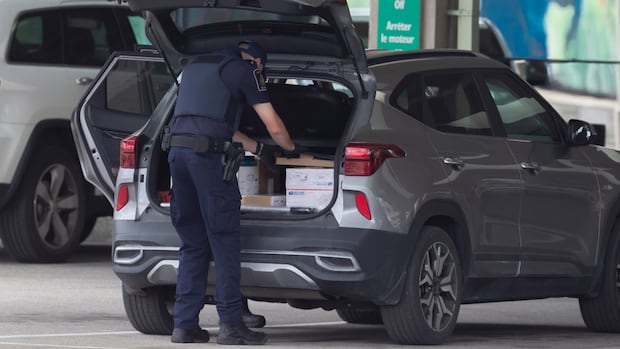


The Canada Border Services Agency (CBSA) has notified 63 of its employees that they will need to accept new positions with reduced salaries due to medical conditions that restrict their ability to carry a sidearm.
In a statement to CBC News, the agency expressed its readiness to provide temporary accommodations for employees unable to carry a firearm because of medical or psychological issues.
However, the agency stated that those requiring permanent accommodations must be reassigned “to a role where the ability to carry a firearm is not an employment requirement.”
Several affected employees, along with their union, are condemning the proposed demotions, arguing that the border officers in question perform tasks that do not necessitate the use of a firearm on a regular basis.
They also contend that the agency is unfairly punishing seasoned employees due to medical or psychological conditions, such as injuries sustained at work or health issues that hinder their ability to requalify for firearm usage every two years.
The 63 officers impacted by this decision constitute 0.7 percent of the 8,500 CBSA roles that mandate the ability to carry a sidearm.
Union labels process as discriminatory and unjust
In a recent communication to the staff, the CBSA cautioned that these employees would undergo “downward deployment without salary protection” as part of the “reasonable accommodation process.”
“We believe it’s discriminatory, arbitrary, and unjust,” remarked Mark Weber, president of the Customs and Immigration Union.
One affected officer criticized the communication as impersonal and bureaucratic.

Mark Weber, president of the Customs and Immigration Union, describes the CBSA’s decision as discriminatory. (Simon Lasalle/Radio-Canada)
The officer expressed feelings of being treated like a mere case file rather than as an individual.
After receiving the notification about the impending pay cut following years of dedicated service, the officer reported feeling emotional.
“It wasn’t the firearm that enabled me to do my job effectively. It was my experience. That experience didn’t vanish when I could no longer carry my firearm,” they stated.
“I wish to continue contributing to meaningful work. I’m seeking the opportunity to do so without facing financial penalties due to a medical disability.”
The employee requested anonymity to share their personal situation without seeking approval from their employer.
In addition to the 63 officers facing demotion, 14 employees currently on sick leave are still under evaluation.
Moreover, 36 officers have chosen to retire since January to avoid losing the accommodations that allowed them to maintain their current roles.
In total, 190 employees had been receiving workplace accommodations related to firearms. Besides those facing demotion or who have already departed, 27 were reassigned to equivalent positions, and 50 returned to their original duties after obtaining medical clearance.
The CBSA employs around 18,000 individuals, with about 8,500 in front-line roles that necessitate the carrying of a firearm, particularly at border crossings and other points of entry.
The hazardous duties at CBSA involve intercepting illegal drugs, firearms, and other prohibited items at the border, alongside deporting individuals who lack authorization to be in Canada.
Use of force is relatively uncommon, with CBSA officers nationwide drawing their sidearms an average of 28 times per year.
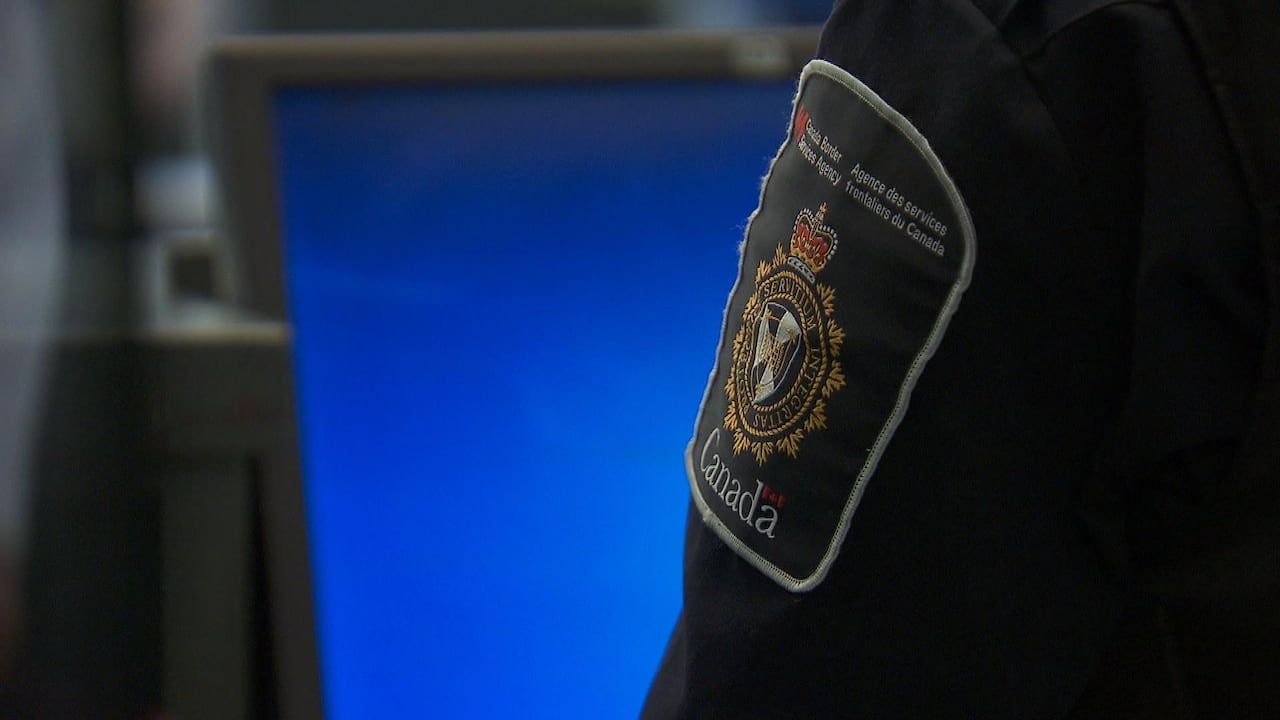
Numerous employees granted accommodations related to firearm carrying conduct office work. (Radio-Canada)
In specific environments, such as airports and postal facilities, border officers may not always have their sidearms. Officers can also fulfill responsibilities without bearing a firearm, including tasks related to the Nexus program, analyzing flight manifests, and training new hires, as stated by the union.
A spokesperson for the CBSA noted that “the carrying of protective and defensive equipment is inherently linked to the performance of border officers’ duties,” which includes law enforcement “when required.”
“When an individual can no longer be fully armed or meet their job requirements, the CBSA has a responsibility to accommodate them,” said spokesperson Kelly Cameron.
However, she emphasized that the agency must judiciously allocate public funds and ensure that employees meet the “essential requirements” of their roles, particularly those that necessitate staffing by an armed officer.
“The CBSA is not obligated to permanently exempt an employee from fulfilling the essential functions of their position or to create unnecessary work,” she stated.
In its correspondence to the 63 employees unable to carry a firearm, the CBSA indicated that there are “no longer any suitable placement opportunities” at their current rank.
At least one letter mentioned that available placements would be communicated “in the coming weeks.”
Weber stated that the agency is unnecessarily losing long-standing employees with decades of experience.
“Essentially, they are being informed by their employer that their value has diminished simply because they cannot carry a firearm anymore,” he remarked.