
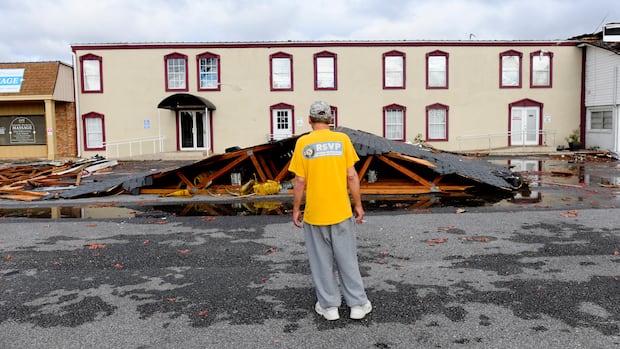


As Isaias downgraded from hurricane status, it left a path of destruction on Saturday, including damaged rooftops, fallen power lines, and flooded streets.
The storm was associated with at least four fatalities, with two individuals perishing due to trees crashing onto their residences in Florida and Alabama. By midday, almost 700,000 customers were experiencing power outages, while meteorologists cautioned that flooding could extend into the southern regions of the Appalachians.
On Friday, the storm made landfall close to Destin, Florida, a Gulf Coast locale celebrated for its fine white-sand beaches and populated with vacation rentals, waterfront bars, and seafood restaurants. After transitioning into a post-tropical cyclone overnight, forecasters alerted to the risks of flash flooding and tornadoes as the storm advanced inland through Alabama. Hundreds of thousands remained without electricity.
The threat of dangerous storm surges still persisted for certain areas of the Florida Panhandle, along with forecasts predicting four to eight inches (10 to 20 centimeters) of rainfall for southern Alabama, the Florida Panhandle, and Big Bend throughout the weekend.
By early Saturday, Isaias was positioned approximately 40 kilometers south-southwest of Montgomery, Alabama, and around 170 kilometers south of Birmingham, with maximum sustained winds recorded at 55 km/h, according to the National Hurricane Center. The storm was anticipated to enter the Tennessee Valley later in the weekend.
“All tropical storm surge warnings have been lifted as of this morning, but high wind warnings remain in effect for parts of the Southeast,” stated Robbie Berg, a warning coordination meteorologist at the National Hurricane Center in Miami. “Even though it has transitioned to post-tropical, it continues to pose a wind threat, along with significant rainfall risks. We could witness notable flash flooding in some areas over the next few days.”
In Florida, Governor Ron DeSantis announced that state roads were clear and that no search and rescue requests had been reported, although he cautioned about potential flooding in the coming days. “Sometimes these occurrences happen a day or two after the storm passes,” he remarked.
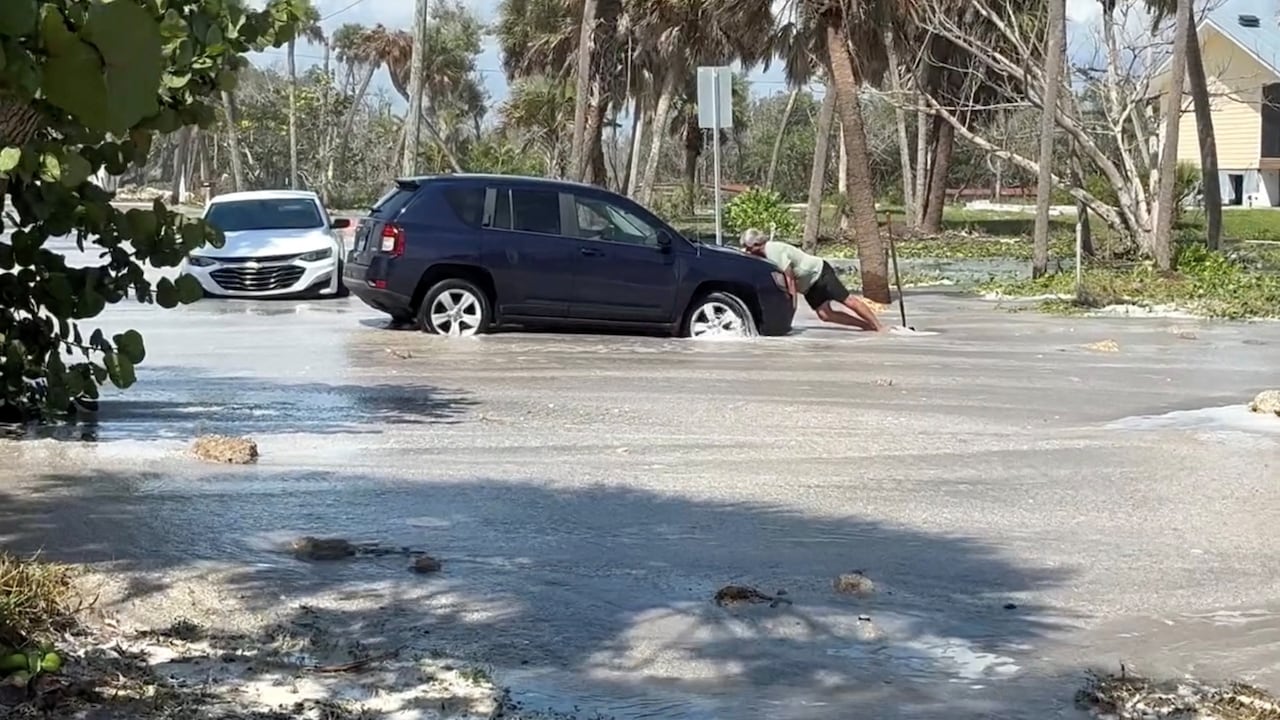
A man attempts to push a car as waves inundate the road on Friday ahead of Hurricane Isaias’s arrival in Englewood, Florida. (Facebook/Reuters)
Isaias, marking the first hurricane of the Atlantic season, inflicted some damage upon making landfall.
The storm’s rapid intensification was driven by record-high sea temperatures in the Gulf of Mexico. The Gulf has experienced significant warming over recent decades, and experts assert that the ongoing marine heatwave was much more likely due to climate change driven by human actions.
While the warm waters supplied the energy required for Isaias, its development was also facilitated by favorable atmospheric conditions, including weak upper-level winds that might have otherwise disrupted the growing storm.
However, just prior to making landfall, increased upper-level wind shear led to a slight weakening of the storm, downgrading it back to Category 2 and causing it to become more disorganized, thus broadening the area affected by damaging winds.
Powerful hurricane winds removed the roof from a hotel in Pensacola, and the city’s mayor, D.C. Reeves, shared on Facebook that the airport experienced “some damage.” He noted that downtown areas lost power and that there were fallen trees and power lines in various locations.
Gas stations in East Milton and Destin, Florida, incurred major damage. Additionally, a condominium in Panama City was affected, with insulation scattered across a parking lot.
Southern Alabama also saw flooding, with officials in Mobile reporting downed trees and power lines. Roads in Houston County, located in the state’s southeastern corner, were closed due to similar issues.
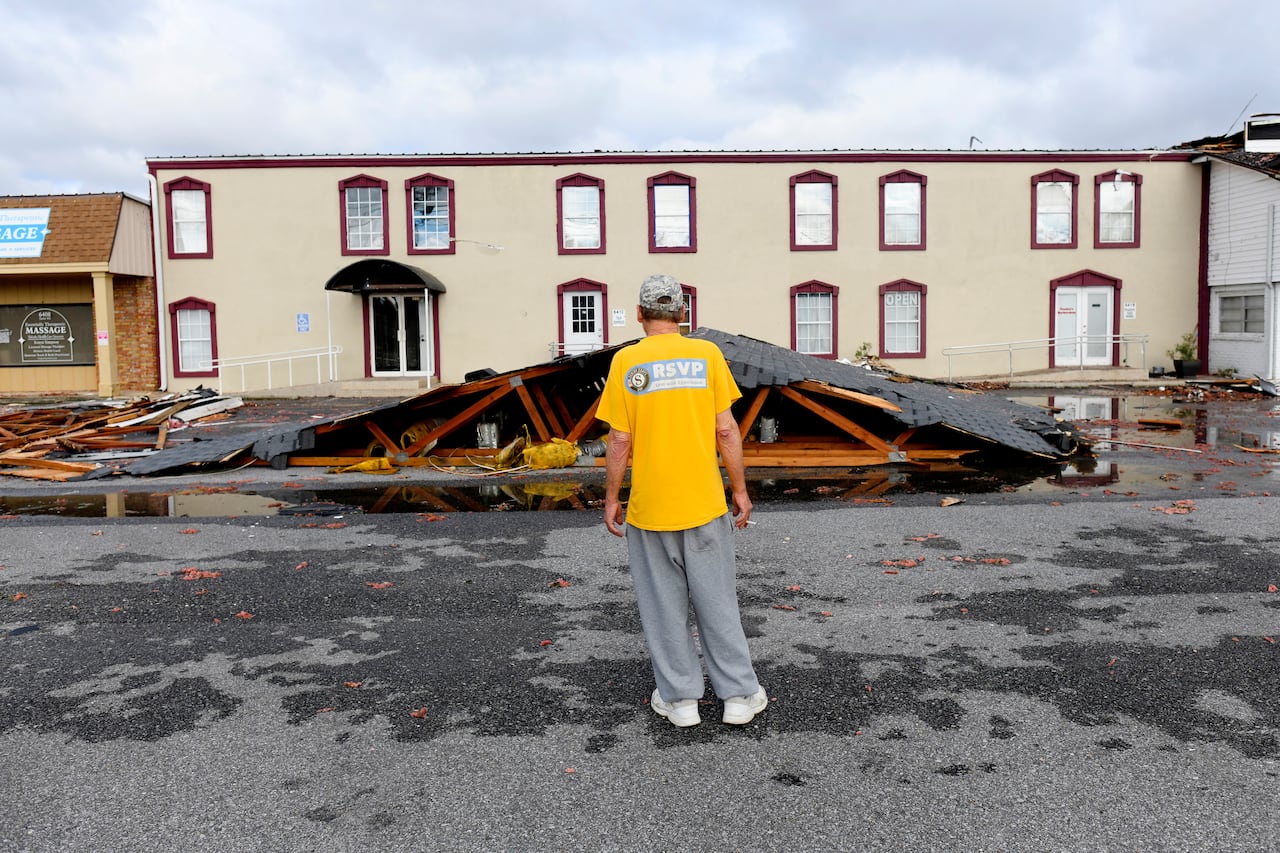
A person examines debris from an apartment roof that was torn off by Isaias in East Milton, Florida, on Saturday. (Octavio Jones/The Associated Press)
Tim Mowry, who weathered the storm at his home in Pensacola, described the wind’s intensity as sounding like a train whistle as it rushed through a crack in his patio door. He lost power around 4:30 p.m. CT but managed to use a generator. His backyard was flooded, and parts of his fence were damaged, yet he felt that the storm was not as severe as he had anticipated.
“From the perspective of Pensacola, we were quite fortunate,” Mowry stated.
Isaias was the first hurricane to impact the eastern United States since Milton devastated the Gulf Coast of Florida in 2024.
In parallel, Simon gained strength as it transformed into a Category 4 hurricane while nearing Mexico’s coastline.
Tropical storm Rachel was also predicted to bring strong winds and heavy rainfall to northern Mexico and Southern California over the weekend.