
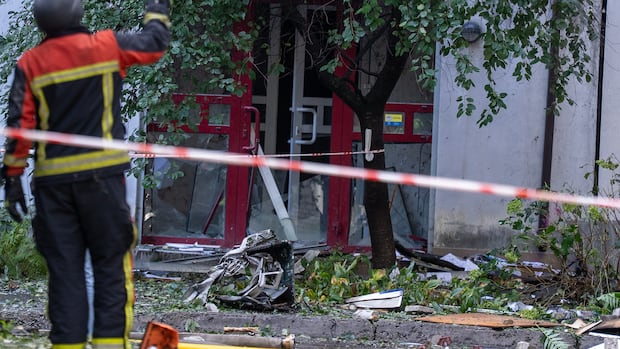


On Friday morning at approximately 8 a.m., a Russian drone struck a high-rise apartment building in Kyiv, resulting in the death of a 14-year-old boy and injuries to several others. Among the shattered glass and charred debris on the street, parts of a jet engine were clearly visible.
Russia has been employing a new type of weapon — jet-powered drones — to conduct attacks on the Ukrainian capital, including strikes on offices, data centers, and storage facilities.
These drones have been relentlessly bombarding Kyiv and other regions of Ukraine for several weeks, often managing to elude Ukrainian air defenses by flying at greater altitudes and significantly higher speeds, exceeding 600 km/h.
“Intercepting them is challenging. You have to engage at a similar or greater speed,” stated Volodymyr Khomenko, the head of the Explosive Ordnance Disposal Department of the National Police of Ukraine.
“For faster drones, we require faster interceptors.”
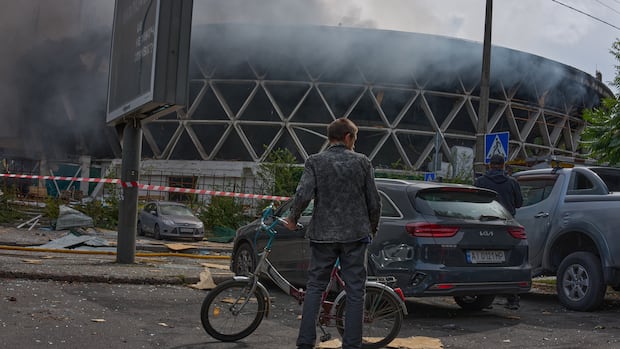
Kyiv is enduring a relentless assault, targeted by Russia’s new strategy employing advanced jet-powered drones for continuous strikes. Residents face regular sirens that compel them to seek refuge in shelters, underpasses, or metro stations, but with air alerts occurring for 11 hours out of every 24, life continues in the city.
What are jet-powered drones?
Ukrainian authorities have reported that Russia began testing its jet-powered strike drones two years ago in the Chernihiv area, which is situated north of Kyiv near the Belarus border.
In contrast to previous models of Shahed drones that were based on Iranian designs and featured piston engines, the latest iterations are outfitted with turbojet engines. Ukrainian military intelligence has indicated that some of these engines are being procured from China.
The Geran series includes three models of jet-powered drones, with the most recent being the Geran-5. This model’s design is markedly different from its predecessors, resembling a cruise missile with aerodynamic fins rather than having a triangular shape.
The Geran-5 can reach cruising speeds of about 600 km/h, which is nearly three times faster than the earlier Shahed models that began targeting Ukrainian cities in 2022.
How frequently is Russia deploying them?
Khomenko mentioned to CBC News that he estimates approximately half of the drones currently launched at Ukraine are jet-powered, with the other half being older variants. However, he noted that this ratio is changing rapidly.
Ukraine’s Air Force reported that in August, Russia launched 2,800 jet-powered drones at Ukraine, nearly double the number from July.
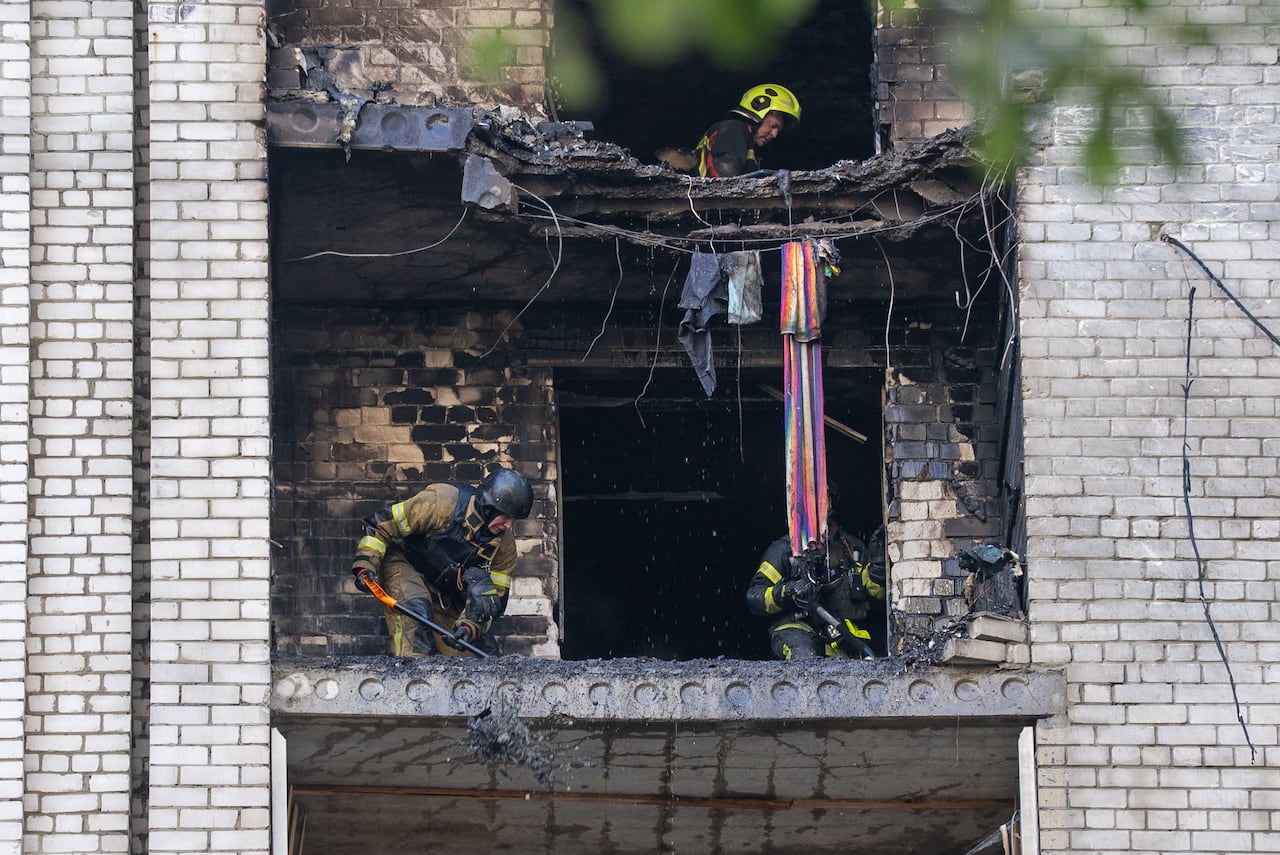
Firefighters remove debris from the scene of a jet-powered drone attack in Kyiv on Friday. (Angela Johnston/CBC)
Recently, Russia has been launching drones in small groups, often leading to extended air-raid alerts in Kyiv. The sounds of air defenses and explosions can be heard throughout the city.
Unlike older models, which produce a buzzing noise likened to a motorcycle, the jet-powered drones are relatively quiet. Residents frequently describe hearing a whooshing sound as they pass overhead.
-
Ukraine’s largest steel plant to shutter amid recurring Russian strikes
-
Russian drones are stalking Ukrainian trains and trying to hobble the country’s rail system
When the drone impacted the apartment building on Friday, Alice Boyko recounted to CBC News that she didn’t realize she heard the air-raid siren until after the blast. She resides in the same building that was hit, but her unit is located on the opposite side.
“Honestly, I was more afraid of missiles, but now I worry about drones as well,” she expressed.
“You never expect this to happen to you.”

Alice Boyko, center, takes shelter with her family in a parkade during an air-raid alert in Kyiv on Friday after a jet-powered drone struck her building. (Angela Johnston/CBC)
Why is it so difficult for air defenses to intercept them?
Ukraine’s Air Force has reported that it is managing to intercept around 60 percent of the jet-powered drones, compared to over 90 percent of the older models.
During air-raid alerts in Kyiv, mobile units equipped with heavy machine guns and shoulder-fired surface-to-air missile systems monitor potential threats in the sky. Above them, fighter aircraft, including F-16s, attempt to take down the drones.
Additionally, Ukraine has built a large fleet of interceptor drones throughout the conflict. However, the current models in operation lack the speed necessary to target the jet-powered drones effectively.
Borys Dolyna, a commander of a Ukrainian interceptor-drone unit, shared with CBC News that the swift movement of the jet-powered drones makes them hard to detect, even on video feeds from interceptor drones. At times, he mentions, they appear as little more than a small pixel on the display.
He has encountered jet-powered drones multiple times, but their speed has been so overwhelming that his team could not intercept them.
What actions is Ukraine taking?
Ukrainian President Volodymyr Zelenskyy has indicated that efforts are underway to hasten the production of newly designed interceptors capable of downing Russian drones.
While officials have reported several successful interceptions, the technology remains in a testing phase.
Cory Woods, a Canadian drone-interceptor pilot operating in Ukraine, usually stationed in the eastern regions closer to the frontline, remarked that drone warfare is evolving at such a rapid pace that it resembles a “cat-and-mouse game.”

Cory Woods, a Canadian from Alberta fighting in Ukraine, states that the drone confrontations in the conflict are becoming ‘dogfights’, and the newer Russian jet-powered drones pose a ‘very challenging’ issue. (Angela Johnston/CBC)
“Every time the enemy innovates and alters their technology or tactics, we must adapt and modify ours,” he explained in an interview with CBC News from Kyiv.
“Once they recognize that, they adjust again, creating a continuous back-and-forth dynamic.”
However, Woods emphasizes that for Ukraine to effectively diminish Russia’s capacity to deploy strike drones nationwide, its military needs to possess weapons that can target the factories producing these drones and the launch sites.
-
Ukraine fires more than 1,000 drones at Russia, including hundreds launched at Moscow
-
Video
The moment a Russian drone bypassed Ukrainian air defenses
“There’s no value in targeting the arrow if you allow the archer to live,” he stated.
“Russia possesses significant manufacturing capabilities. They have been preparing for this for years and have amassed considerable stockpiles.”
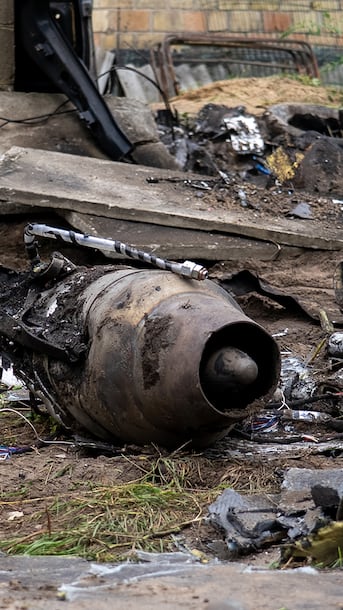
The deadly jet-powered drones from Russia represent one of the gravest threats facing Ukraine as the nation struggles to devise an effective means of intercepting them. Ihor Zabotskyi was at home when one of these drones crashed into his backyard on the eastern outskirts of Kyiv.