
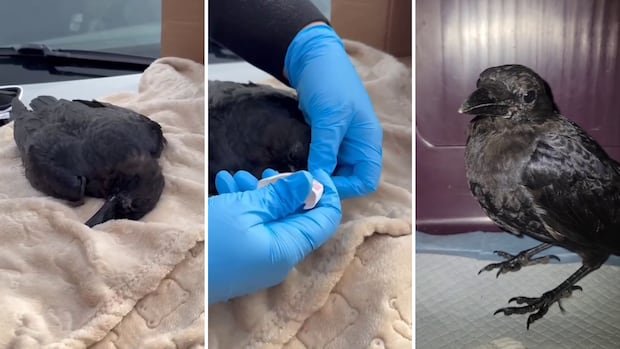


An animal welfare organization in downtown Prince George, B.C., has been providing nasal naloxone to crows suspected of ingesting toxic substances found in easily accessible areas outside. The Good Caws Crow Rescue Society (GCCRS) has shared several videos demonstrating their volunteers administering nasal naloxone to unresponsive crows, with the birds showing signs of alertness and the ability to fly again after the intervention.
Naloxone, commonly used to counteract opioid overdoses in humans, is being used by the GCCRS to assist crows in an area known for illicit drug activity, according to Dayna Slater from the organization. She expressed concern over the situation, describing it as a convergence of various factors leading to a troubling scenario.
Slater noted a significant increase in suspected drug overdoses among crows this year, surpassing previous years’ occurrences. She described the symptoms observed in affected crows, including closed eyes, slowed heartbeat, unresponsiveness, and some exhibiting a brown liquid foam from their beaks. While some crows have unfortunately perished, most have been successfully rehabilitated and released within 24 hours.
Dr. Kaitlyn Liukaitis from the Birchwood Veterinary Clinic, who has treated some of the affected crows, confirmed that the symptoms align with toxic drug overdoses. She emphasized the efficacy of naloxone in reversing these symptoms, highlighting its growing use as a treatment tool in veterinary care for various animals.
The rise in drug toxicity has been a concern across cities in British Columbia, prompting multiple public alerts. In Prince George, overdose incidents have surged, leading to an increase in emergency calls and sirens downtown, where the affected crows are being discovered.
Advocates for harm reduction measures emphasize the importance of safe indoor spaces for drug consumption to prevent hazardous substances from being left outdoors. Slater mentioned collaborating with harm reduction groups to identify and assist crows experiencing suspected overdoses, utilizing expired naloxone kits provided by these organizations.
While Slater believes the crows are unintentionally exposed to toxic substances present in garbage left outdoors, she sees it as a reflection of broader societal issues. She suggested implementing covered garbage cans to prevent crows from accessing harmful materials disposed of in public spaces.
The situation underscores the need for proactive measures to protect wildlife and address the root causes of environmental hazards affecting animal populations.