
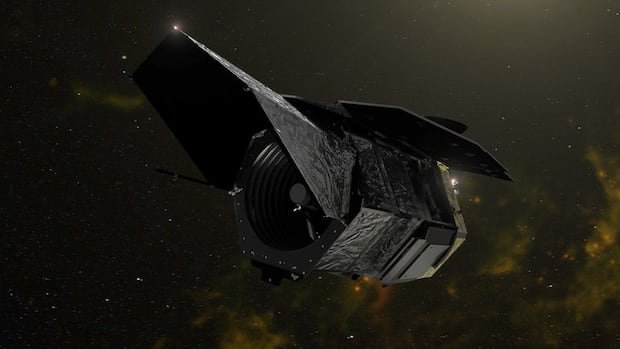


At 7:26 a.m. this Sunday, a cutting-edge space telescope is scheduled to launch from Cape Canaveral, Florida atop a Falcon Heavy rocket. The Nancy Grace Roman Space Telescope, named after NASA’s inaugural chief astronomer, is poised to provide fresh insights into the mysteries of our cosmos. This eagerly awaited mission will position the telescope 1.5 million kilometers away at the L2 point, where gravitational equilibrium enables satellites to maintain a stable orbit. Initially planned for a five-year endeavor, there is potential for an extension.
The distinctiveness of the Nancy Grace Roman Space Telescope lies in its advanced capabilities compared to existing space telescopes like the Hubble Space Telescope and the James Webb Space Telescope. While boasting a similar 2.4-meter mirror to Hubble, Nancy Grace Roman also features a coronagraph for blocking starlight to detect planets circling distant stars. Moreover, its Wide Field Instrument, as sensitive as Hubble’s, can capture images over an area a hundred times larger, akin to transitioning from a pinhole view to a golf ball-sized perspective.
Equipped to discern billions of stars, the telescope’s sophisticated camera enables a wide array of sky and stellar surveys. Anticipation surrounds the potential breakthroughs that astronomers could achieve with the Nancy Grace Roman Space Telescope.
One significant area of exploration is the quest for exoplanets. The telescope aims to expand our understanding of other planetary systems and potentially unravel the uniqueness of our solar system by studying over 6,300 confirmed exoplanets, primarily discovered by the Kepler Space Telescope. Utilizing methods like the transit technique, which detects subtle dimming of stars when planets pass in front of them, the Nancy Grace Roman Space Telescope endeavors to survey around 100 million stars, heralding a substantial leap in exoplanet discoveries.
Another pivotal focus of the mission involves investigating dark matter and dark energy, which together constitute a substantial portion of the universe’s composition. While visible matter comprises a mere five percent, dark matter (27%) acts as an unseen force binding galaxies and stars, with dark energy (68%) believed to drive the universe’s expansion. Through meticulous observations within galaxies and globular clusters, the telescope aims to map the distribution of dark matter and normal matter across millions of galaxies.
By shedding light on these enigmatic cosmic phenomena, the Nancy Grace Roman Space Telescope is poised to revolutionize our understanding of the universe’s intricacies and unveil new realms of knowledge in the field of astronomy.