
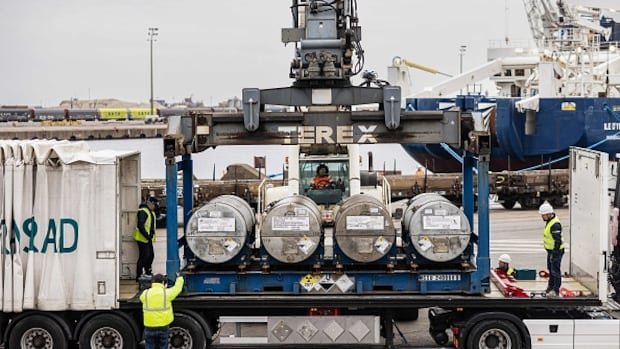


Amid the Russian military occupation of Ukraine’s largest nuclear plant and attacks on its power infrastructure, European and U.S. reliance on Russian nuclear fuel for electricity generation continues. Notably, Canadian-owned Westinghouse Electric is a recipient of low enriched uranium (LEU) from Russia for fueling commercial nuclear reactors in the U.S., as per shipping data reviewed by CBC’s investigative program, the fifth estate.
Although the U.S. prohibited the import of Russian enriched uranium in August 2024 to reduce dependence on Russian material and ensure a robust domestic fuel supply, the Prohibiting Russian Uranium Imports Act allows waivers under certain conditions. These waivers are set to expire by January 1, 2028.
According to a report by the Bellona Environmental Transparency Center in Vilnius, Lithuania, the U.S. imported 400 tonnes of low enriched uranium from Russia in 2025 alone, valued at approximately $1 billion US. Major recipients included subsidiaries of French-owned nuclear company Framatome, U.S. nuclear fuel supplier Global Nuclear Fuel Americas, and Westinghouse.
While the European Union has no ban on Russian enriched uranium imports, Canada has not imposed sanctions on dealings with Russia’s state atomic energy corporation Rosatom or its export arm, Tenex. The need to reduce dependency on Russia and terminate all potential collaboration has been emphasized by experts.
Westinghouse’s South Carolina facility receives and processes enriched uranium into fuel pellets, which are then assembled into fuel rods for use in commercial nuclear power reactors. This process involves utility companies purchasing uranium from suppliers, which is then fabricated into fuel assemblies by fuel fabricators before being utilized in reactors.
The U.S. and Europe have long relied on Russian enriched uranium, constituting a significant portion of global supply. Efforts are underway to transition to domestic production and diversify sourcing to reduce this dependence. Westinghouse and its parent companies, including Brookfield Renewable Partners and Cameco Corporation, play crucial roles in the nuclear energy sector.
Although Canada’s existing CANDU reactors use natural uranium and do not require enrichment, proposed new reactors, such as small modular reactors, would necessitate enriched uranium. The government has announced plans to support enriched nuclear fuel purchases from allied nations to meet future reactor requirements.
In light of geopolitical tensions and Russia’s actions, calls have been made to limit engagement with Russian state nuclear entities to prevent inadvertently supporting Moscow’s aggressive campaigns. Efforts to support Ukraine, including supplying nuclear fuel and building new reactors, have been undertaken by companies like Cameco and Westinghouse as alternatives to Russian involvement.