
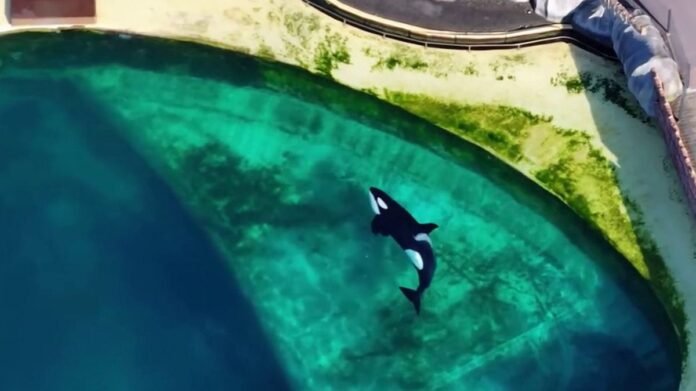


New distressing video footage has surfaced, seemingly depicting the lifeless bodies of two orcas floating in a deteriorating tank. However, the reality behind this grim scene is even more heart-wrenching.
Earlier this year, in anticipation of a new law prohibiting orcas from performing in aquatic shows, Marineland of Antibes, a marine park in France, shut its doors to the public. Despite the park’s eerie emptiness, two inhabitants, Wikie and Keijo, a mother and her son, have been left abandoned in dismal conditions for nearly a year.
A poignant drone video captured by photojournalist Seph Lawless has brought to light the tragic plight of these majestic creatures, evoking emotional responses from those who have witnessed it. Initially mistaking the orcas for deceased, Seph disclosed in an Instagram post that the mother orca, thought to be lifeless, suddenly moved, gazing up at the drone with curiosity and relief.
The video documented a touching moment where the orcas, devoid of an audience, started to perform, reminiscing about their past shows. Despite the absence of spectators, the duo exhibited a sense of joy and freedom, indicating a longing for liberation.
Amidst efforts to relocate the majority of the park’s former residents, Wikie, aged 23, and Keijo, aged 11, along with 12 bottlenose dolphins, remain in uncertain circumstances. Tragically, past incidents involving the orcas’ family members, including deaths due to infections and ingestions, underscore the urgent need for improved conditions.
Despite proposals to transfer Wikie and Keijo to alternative facilities being thwarted, concerns persist over their deteriorating environment at Marineland, with issues of poor hygiene and confinement stress posing significant risks to their well-being. The urgency to secure a suitable sanctuary for the orcas remains paramount, as their current situation is critical and unsustainable.
The plight of captive orcas, exemplified by the distressing situation at Marineland, rekindles debates surrounding the ethics of keeping such intelligent beings in captivity. The complexities of reintegrating Wikie and Keijo into the wild, coupled with their potential impact on existing marine life, underscore the challenges in finding a lasting solution for their welfare.
As discussions continue on the fate of Wikie and Keijo, the imperative to prioritize their health and freedom remains a pressing concern that resonates with animal welfare advocates worldwide.