
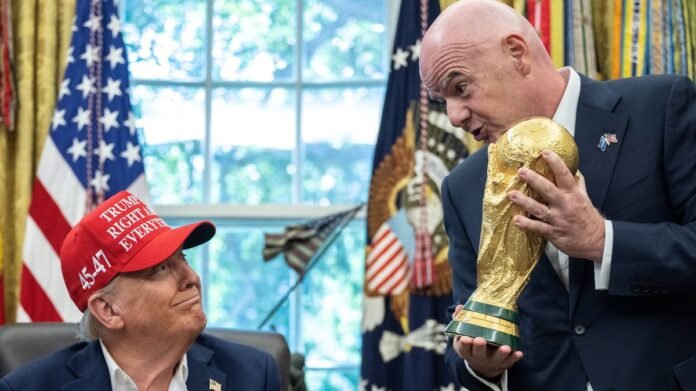


Amid a unique blend of politics and sportsmanship, the forthcoming World Cup draw, scheduled near the White House, is set to unfold with grandeur and intrigue. The prestigious event, typically a global celebration of soccer, is poised to showcase a distinctive collaboration between Donald Trump and FIFA president Gianni Infantino. The symbolic venue for this occasion is the Kennedy Centre, chaired by Trump following recent board reshuffles.
Although the guest list includes football icons, US sports luminaries, and celebrities, the spotlight will undeniably be on Trump, accompanied by Mexican President Claudia Sheinbaum and Canadian Prime Minister Mark Carney. The ceremony is meticulously tailored to Trump’s tastes, evident in the program’s lineup and content.
Noteworthy elements of the event include a performance by The Village People of their iconic hit “YMCA,” a song synonymous with Trump’s political rallies. Additionally, the introduction of a novel FIFA Peace Prize breaks tradition, with speculations rife that Trump will be the recipient, a move criticized for blurring FIFA’s promised political impartiality.
Infantino’s recent creation of the peace award, inspired by Trump’s involvement in the Israel-Gaza ceasefire, has stirred controversy, highlighting FIFA’s perceived alignment with influential figures and departure from its core values. Concerns loom over the event’s transformation from a global sporting affair to a platform endorsing specific political agendas, raising apprehensions among senior football officials.
Amidst escalating unease, Trump’s inflammatory remarks about Somali immigrants have further fueled apprehensions regarding the draw’s trajectory. The intertwining of football with political overtones, particularly associated with Trump, has triggered concerns about FIFA’s evolving stance on neutrality and ethical standards.
Infantino’s increasing proximity to Trump, marked by recurring public appearances and shared initiatives, has drawn scrutiny, with critics questioning FIFA’s impartiality and its endorsements of controversial leaders. The evolving dynamics between Infantino and Trump have sparked debates within the football community, casting a shadow over the integrity of the sport.
As preparations for the World Cup draw unfold against a backdrop of political theatrics and diplomatic entanglements, the convergence of sports and politics raises pertinent questions about the future of global football governance and the sanctity of the game.
Amidst the intricacies of power dynamics and strategic alliances, the intersection of football with political ambitions underscores the delicate balance between sportsmanship and geopolitical influences, underscoring the potential ramifications for the sport’s integrity and universal appeal.