
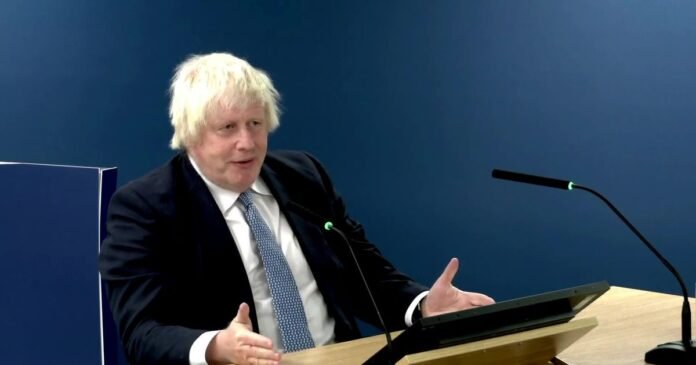


Boris Johnson’s frustration over the 2020 exams controversy was evident in leaked WhatsApp messages to the Covid Inquiry, where he contemplated removing Sir Gavin Williamson from his position. The former Prime Minister admitted the system failure that resulted in 40% of predicted grades being downgraded due to an algorithm. In one message to his aide Dominic Cummings, Johnson expressed a strong desire for reform within the Department of Education, hinting at potential dismissals.
During his testimony, Johnson acknowledged the government’s delayed realization of the severity of the pandemic, particularly in relation to the impact on children. He faced scrutiny over the decision to close schools for extended periods during 2020 and 2021, with concerns raised about the long-lasting effects on young people. The inquiry highlighted the significant challenges faced by children as a result of the disrupted education system.
Amid discussions on potential future measures, Johnson emphasized the importance of considering school closures as a last resort in handling similar events in the future. Reflecting on past decisions, he admitted that some actions, such as the Eat Out to Help Out scheme, faced criticism but were deemed necessary to support the struggling economy.
Regarding the handling of mass testing in schools, Johnson admitted seeking further details on the rollout just days before students were scheduled to return. The inquiry raised questions about the lack of a clear plan for testing and the responsibility placed on schools for its implementation.
As the inquiry delved into the impact of lockdown measures on children, emotional testimonies from affected families were shared, highlighting the severe consequences faced by vulnerable children during the closures. Johnson expressed regret over the disruptions caused by the pandemic and acknowledged the challenges in decision-making during unprecedented circumstances.
The inquiry also examined the role of government officials in responding to the evolving situation, including discussions on the timing of school closures and the level of planning undertaken beforehand. Johnson defended the government’s actions, stating that decisions were made based on the available information and the evolving nature of the crisis.
As the inquiry continued, Johnson faced questions about the handling of the exams fiasco and the subsequent impact on students. He admitted to the shortcomings in the grading system and the need to prioritize fairness for students affected by the algorithm errors. The inquiry highlighted the difficult balance between addressing the immediate crisis and mitigating the long-term consequences for children’s education.
In light of the testimony presented, calls for accountability and justice for affected children were emphasized by advocacy groups, underscoring the need for political leaders to address the challenges posed by the pandemic and its aftermath. The inquiry sought to uncover the lessons learned from the past to inform future strategies in safeguarding children’s well-being and education.